


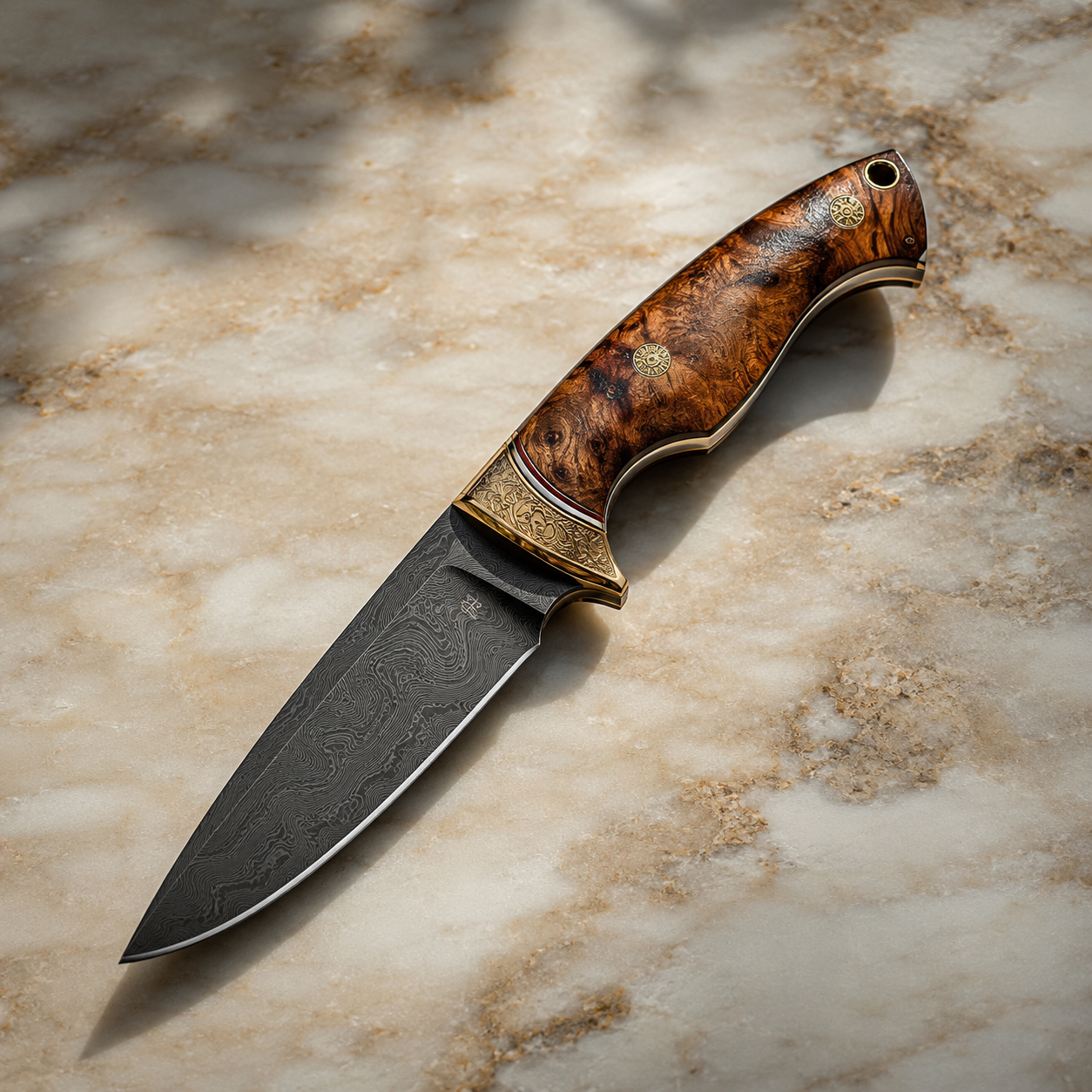
Most luxury knives are judged by their blade.
Collectors know the opposite is often true.
The handle is where craftsmanship, ergonomics, material science, and artistic identity converge. A blade may determine performance, but a designer handle is what transforms a knife into a collectible object.
What Defines “Designer Handle” of Luxury Knives?
The Short Answer
A designer handle is not defined by decoration alone.
It combines:
- Exceptional materials
- Purposeful ergonomics
- Distinct visual identity
- Precision craftsmanship
- Long-term durability
- Cohesion with the knife's overall design language
Key Insight: Expensive materials do not automatically create a designer handle. The defining factor is how materials, form, and function work together.
The Five Elements of a True Designer Handle
1. Material Selection Beyond Utility
Luxury knife makers choose materials for more than strength.
Each material contributes visual depth, tactile character, aging behavior, and exclusivity.
Common premium handle materials include:
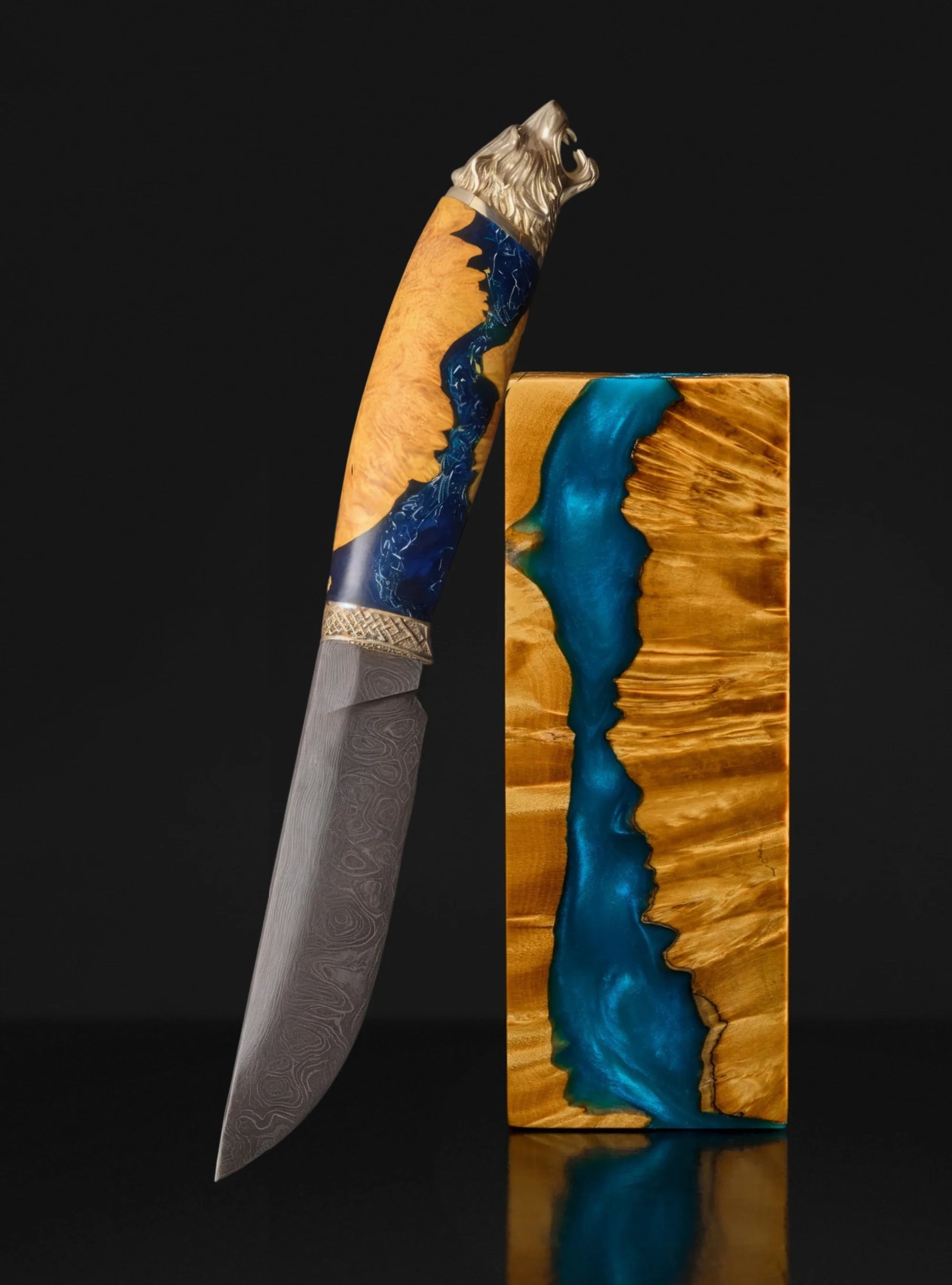
- Stabilized burl wood
- Desert ironwood
- Ebony
- Walnut
- Box elder burl
- Carbon fiber
- Titanium
- Mammoth ivory (where legally permitted)
- Mokume-gane accents
- Exotic hardwood composites
Fact
High-quality stabilized woods resist moisture, cracking, and dimensional changes far better than untreated natural wood.
Insight
The best designer handles reveal new details under changing light rather than relying on excessive ornamentation.

2. Ergonomics That Feel Invisible
Exceptional ergonomics are rarely noticed immediately.
Poor ergonomics are.
A designer handle should:
- Distribute pressure evenly
- Eliminate hot spots
- Support natural grip positions
- Maintain control during extended use
- Balance the knife properly
The highest compliment for a luxury handle is that it disappears in the hand.
3. Unique Design Language
Designer handles possess recognizable identity.
Experienced collectors can often identify a maker by the handle silhouette alone.
Distinctive characteristics may include:
- Signature contours
- Proprietary inlays
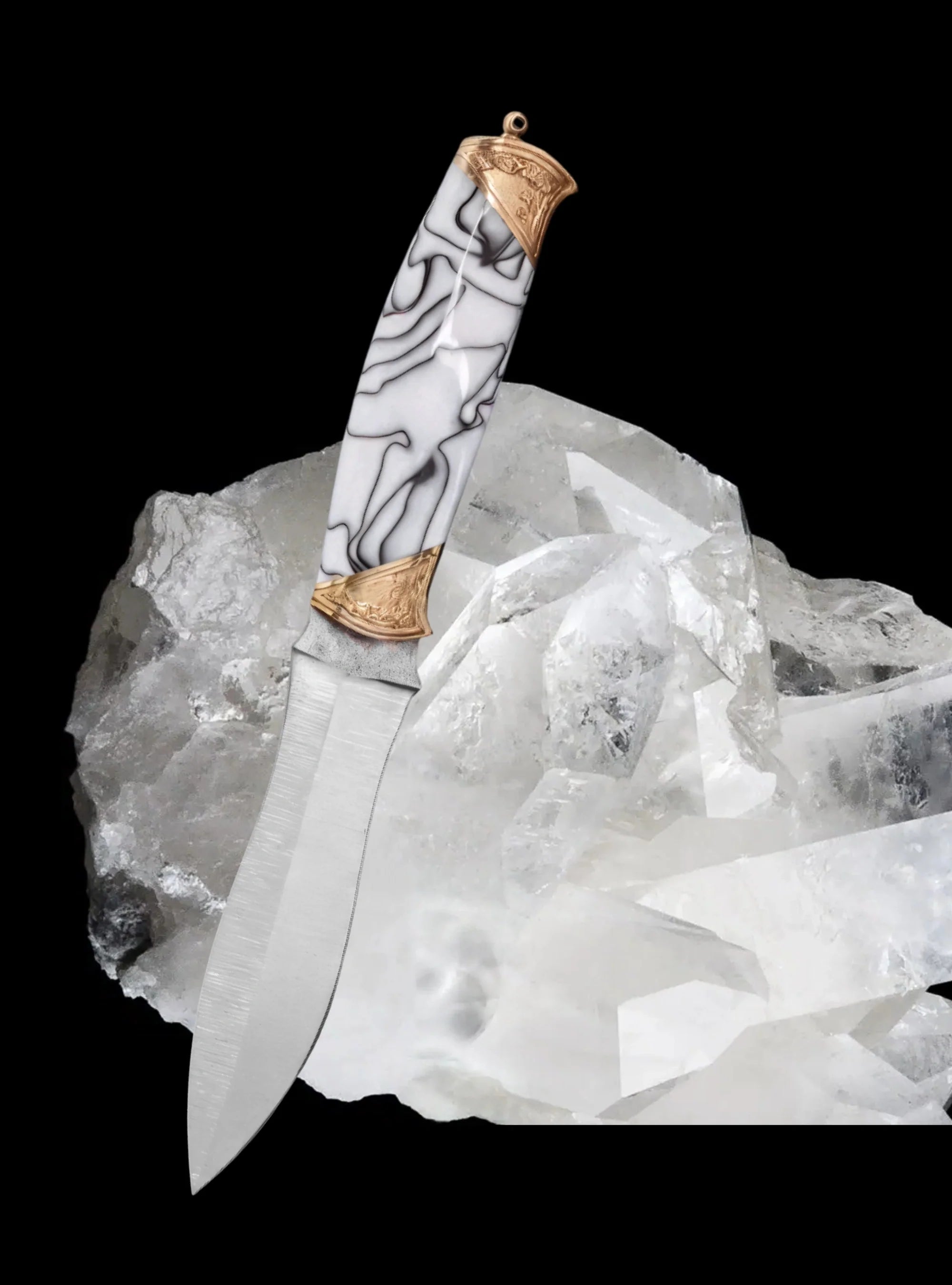
- Unique bolster shapes
- Characteristic wood grain orientation
- Exclusive hardware design
A luxury handle becomes "designer" when its form is recognizable even without seeing the blade or logo.
Handle Materials Ranked by Luxury Appeal
| Material | Exclusivity | Visual Character | Longevity |
|---|---|---|---|
| Premium stabilized burl wood | Exceptional | Exceptional | Excellent |
| Desert ironwood | Exceptional | Excellent | Excellent |
| Ebony | High | Excellent | Excellent |
| Titanium | High | Modern | Exceptional |
| Carbon fiber | Moderate-High | Contemporary | Exceptional |
| Standard hardwood | Moderate | Good | Good |
| Plastic composites | Low | Limited | Good |
The Importance of Hand Finishing
Machine production creates consistency.
Hand finishing creates distinction.
Premium handle finishing often includes:
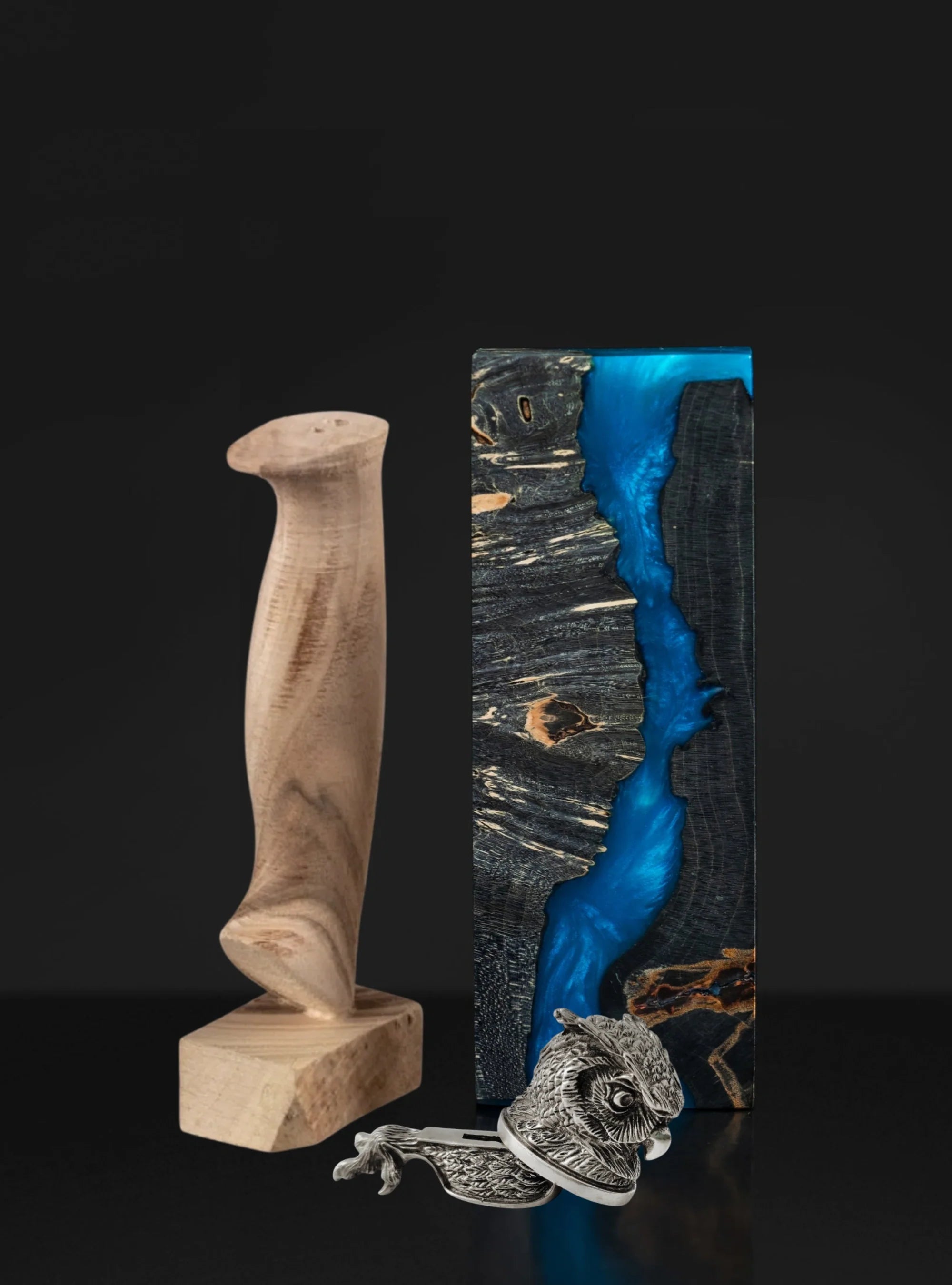
- Hand shaping
- Progressive sanding
- Multiple polishing stages
- Precision contour refinement
- Manual fit-and-finish inspection
Fact
Many luxury knife handles receive more labor hours during finishing than the blade itself.
4. Material Transitions and Detail Work
Luxury craftsmanship is often revealed in transitions.
Look closely at:
- Wood-to-metal junctions
- Spacer alignment
- Pin placement
- Symmetry
- Surface continuity
Poor transitions immediately expose average craftsmanship.
Exceptional transitions appear seamless.
Collector's Rule
The smaller the detail, the more revealing it becomes.
5. Aging Gracefully
True luxury improves with time.
The finest designer handles develop:
- Richer color depth
- Enhanced grain contrast
- Natural patina
- Smoother tactile feel
Cheap handles deteriorate.
Premium handles mature.
Visual Comparison
Custom Diagram Idea
"Anatomy of a Designer Knife Handle"
Annotated illustration highlighting:
- Premium handle material
- Ergonomic palm swell
- Precision pins
- Decorative spacer
- Bolster transition
- Balance point
- Hand-finished contours
This visual helps readers instantly understand where craftsmanship is concentrated.
Designer Handle vs Standard Handle
| Feature | Designer Handle | Standard Handle |
| Material selection | Curated and often rare | Primarily cost-driven |
| Ergonomics | Individually refined | Generic |
| Visual identity | Distinctive | Functional |
| Hand finishing | Extensive | Minimal |
| Collectibility | High | Low |
| Aging characteristics | Improves over time | Often degrades |
What Collectors Notice First?
Experienced collectors typically evaluate:
- Material quality
- Ergonomic shaping
- Finish consistency
- Fit between components
- Overall balance
The logo is usually one of the least important indicators.

Summary Block
Fact
A designer handle is defined by the integration of premium materials, ergonomic engineering, craftsmanship, and visual identity.
Metric
Luxury handles often require multiple finishing stages and significant hand labor beyond standard production methods.
Insight
Material rarity alone does not create luxury. Design execution and craftsmanship determine value.
Fact
The most collectible handles remain recognizable even without visible branding.
Insight
A true designer handle enhances both performance and aesthetic appeal while aging gracefully over decades.
Final Thought
The blade may initiate the purchase.
The handle often becomes the reason a luxury knife is kept, displayed, collected, and passed down.
That distinction is what separates a cutting tool from a lasting object of craftsmanship.
Share:
What Affects Luxuy Knife Balance?
The Psychology of Collecting Unique Handmade Objects