

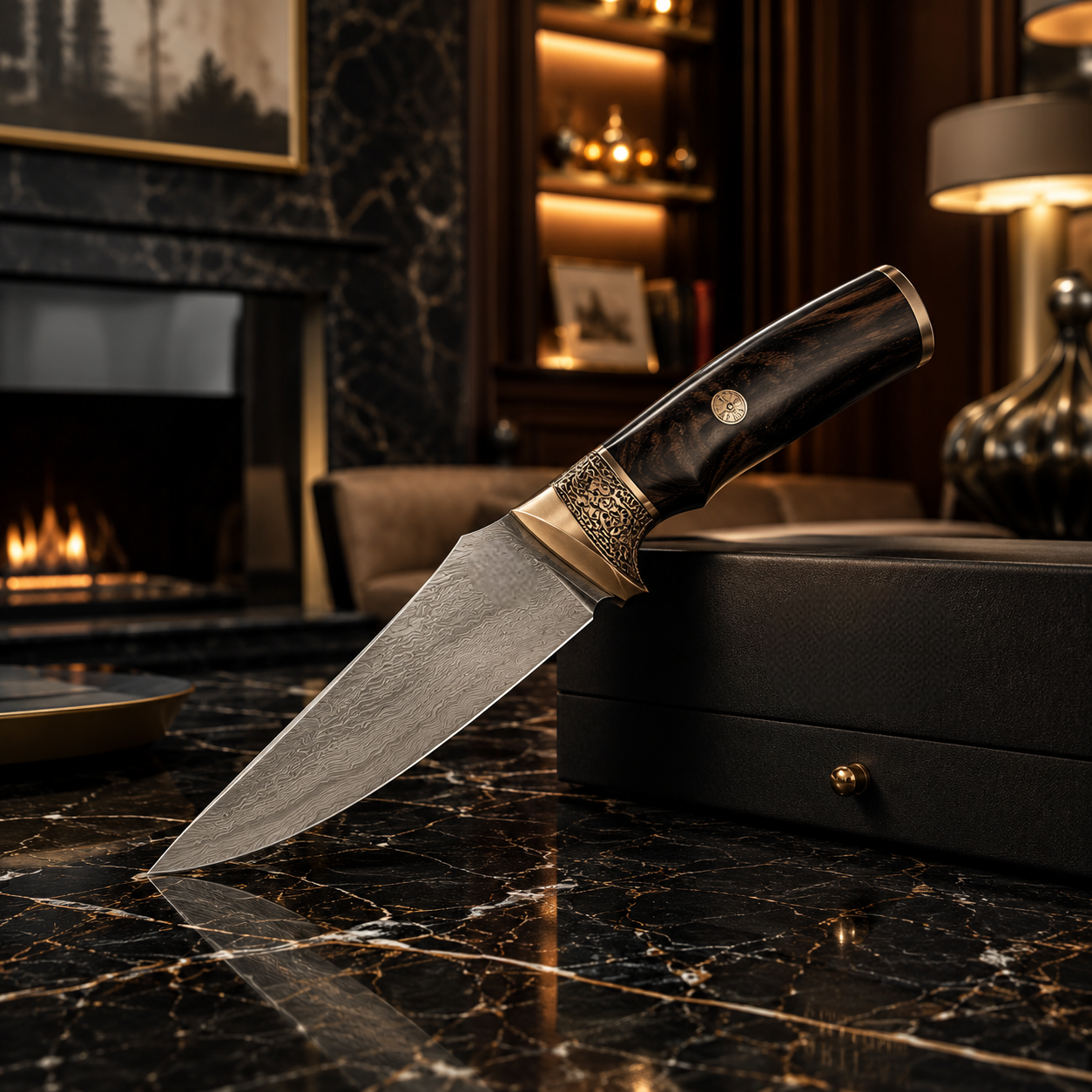
Balance is one of the most important yet often misunderstood characteristics of a luxury knife. While blade steel, handle materials, and craftsmanship typically receive the most attention, balance plays a critical role in how a knife feels, performs, and handles in the hand.
A well-balanced knife can feel like a natural extension of the user, offering greater control, comfort, and precision. In contrast, a poorly balanced knife may feel awkward, fatiguing, or difficult to maneuver, regardless of how beautiful or expensive it is.
Whether you are a collector, outdoor enthusiast, craftsman, or someone who appreciates fine cutlery, understanding what affects knife balance can help you evaluate quality and choose a knife that performs exceptionally well in real-world use.
What Affects Luxuy Knife Balance?
What Is Knife Balance?
Knife balance refers to how the weight of a knife is distributed between the blade and the handle.
The balance point is the location where the knife can be evenly supported without tipping significantly toward either end.
Balance influences:
- Handling comfort
- Precision and control
- Cutting efficiency
- Perceived weight
- User fatigue
- Overall experience
A luxury knife should not simply look impressive—it should feel refined and natural in the hand.
Why Balance Matters?
Many people assume that a lighter knife automatically performs better. In reality, proper weight distribution is often more important than total weight.
Good balance can provide:
- Better maneuverability
- Increased accuracy
- Improved comfort
- Reduced hand strain
- Greater confidence during use
Luxury knife makers invest significant effort into achieving optimal balance because it directly affects performance and user satisfaction.
1. Blade Length
Blade length is one of the primary factors influencing balance.
Longer Blades
Longer blades generally shift more weight forward.
Characteristics include:
- Increased cutting momentum
- Stronger blade presence
- Forward-balanced feel
Shorter Blades
Shorter blades often create:
- Faster handling
- Greater agility
- More neutral balance
The ideal blade length depends on the knife's intended purpose and desired handling characteristics.

2. Blade Thickness
Blade thickness significantly affects weight distribution.
Thick Blades
Thicker blades typically:
- Add forward weight
- Increase durability
- Create a blade-heavy feel
Thin Blades
Thinner blades generally:
- Reduce overall weight
- Improve agility
- Promote neutral handling
Luxury knife designers carefully balance thickness to achieve the desired combination of strength and control.
3. Blade Steel Density
Different steels have slightly different densities and characteristics.
Although the differences may appear minor, premium knife makers consider steel properties when optimizing balance.
Factors include:
- Material density
- Hardness requirements
- Structural performance
In luxury knives, every component contributes to the final handling experience.
4. Handle Material Selection
Handle materials have a major influence on balance.
Dense Handle Materials
Examples include:
- Exotic hardwoods
- Metal alloys
- Brass
- Titanium
These materials can shift weight toward the rear of the knife.
Lightweight Handle Materials
Examples include:
- Carbon fiber
- Modern composites
- Lightweight stabilized woods
These materials reduce handle weight and may allow the blade to feel more prominent.
The choice of handle material significantly affects overall balance characteristics.
5. Handle Size and Shape
The dimensions of the handle influence both comfort and weight distribution.
Larger Handles
Larger handles typically:
- Add rear weight
- Increase hand support
- Create a more balanced feel on larger knives
Smaller Handles
Smaller handles often:
- Reduce overall weight
- Increase agility
- Shift balance slightly forward
Luxury makers carefully tailor handle proportions to complement blade dimensions.
6. Full Tang vs Partial Tang Construction
Tang design plays a major role in weight distribution.
Full Tang Construction
A full tang extends throughout the entire handle.
Benefits include:
- Greater structural strength
- Improved durability
- More even weight distribution
Many premium knives utilize full tang construction because of its strength and balance advantages.
Partial Tang Construction
Partial tang knives may:
- Reduce weight
- Alter balance characteristics
- Create a lighter feel
The ideal choice depends on the knife's intended application.
7. Bolsters and Guard Components
Bolsters and guards are often found on luxury knives.
These components can affect balance significantly.
Heavy Bolsters
Benefits include:
- Improved weight distribution
- Enhanced control
- Smoother transitions between blade and handle
Many high-end knives use bolsters strategically to position the balance point precisely where desired.
8. Internal Weight Distribution
Some luxury knife makers carefully adjust hidden internal components.
These adjustments may include:
- Tang geometry
- Internal reinforcement
- Material thickness variations
The goal is to achieve an ideal balance point without compromising aesthetics.
9. Intended Knife Purpose
Different knife types benefit from different balance characteristics.
Utility and Everyday Carry Knives
Often favor:
- Neutral balance
- Versatile handling
- Easy control
Outdoor and Field Knives
May benefit from:
- Slight forward balance
- Enhanced cutting power
Collector and Presentation Knives
Often emphasize:
- Elegant handling
- Visual harmony
- Refined weight distribution
The best balance depends on how the knife is expected to be used.
10. Overall Knife Geometry
Balance is not determined by a single component.
Rather, it results from the interaction of:
- Blade length
- Blade thickness
- Steel choice
- Handle material
- Tang design
- Hardware placement
Luxury knife makers approach balance as a complete system rather than focusing on individual parts in isolation.
Where Should the Balance Point Be?
There is no universal answer.
However, many premium knives place the balance point:
- Near the front of the handle
- Around the guard area
- Close to the user's index finger position
This often provides a combination of control and comfort.
The optimal location varies according to knife style and intended use.

How Luxury Makers Achieve Superior Balance?
High-end knife manufacturers often use:
Precision Engineering
Every component is carefully designed to contribute to desired handling characteristics.
Premium Materials
Material selection is optimized for both aesthetics and performance.
Extensive Testing
Prototypes are evaluated to ensure balance feels natural in real-world use.
Hand Finishing
Fine adjustments may be made during production to improve handling.
This attention to detail often distinguishes luxury knives from mass-produced alternatives.
Common Misconceptions About Knife Balance
Heavier Means Better
Not necessarily.
Proper balance is more important than overall weight.
Perfect Balance Is Always Centered
Different knives require different balance points depending on their purpose.
Balance Only Matters for Professionals
Anyone can appreciate improved comfort, control, and handling.
Balance affects every user, regardless of experience level.
How to Evaluate Knife Balance?
When holding a knife, consider:
- Does it feel natural?
- Does it tip excessively forward or backward?
- Is the weight distribution comfortable?
- Does it feel controlled during movement?
- Can it be maneuvered easily?
A well-balanced knife often feels lighter than its actual weight because the weight is distributed effectively.
Final Thoughts
Luxury knife balance is the result of careful engineering, thoughtful material selection, and skilled craftsmanship. Factors such as blade length, blade thickness, handle materials, tang construction, bolsters, and overall geometry all contribute to how a knife feels and performs.
The finest luxury knives are not simply designed to look beautiful—they are engineered to provide exceptional handling, comfort, and control. Understanding what affects balance allows buyers and collectors to appreciate the craftsmanship behind a truly premium knife and choose a model that delivers both elegance and performance.
Frequently Asked Questions
What is knife balance?
Knife balance refers to how weight is distributed between the blade and handle, affecting handling, comfort, and control.
Why is balance important in a luxury knife?
Good balance improves maneuverability, precision, comfort, and overall user experience.
Where should a knife's balance point be?
Many premium knives balance near the front of the handle or guard area, though the ideal location depends on the knife's purpose.
Does blade length affect balance?
Yes. Longer blades typically shift weight forward and create a more blade-heavy feel.
Do handle materials influence balance?
Absolutely. Dense materials such as hardwood, brass, and titanium can significantly affect weight distribution.
What is a full tang knife?
A full tang knife has a blade extension that runs through the entire handle, often improving strength and balance.
Are heavier knives better balanced?
Not necessarily. Proper weight distribution is more important than total weight.
Do collectors care about knife balance?
Yes. Balance is often viewed as a sign of quality craftsmanship and thoughtful design.
Can balance affect cutting performance?
Yes. Proper balance improves control, precision, comfort, and efficiency during use.
What makes luxury knife balance different?
Luxury knives are often engineered with greater attention to material selection, geometry, and weight distribution, resulting in a more refined handling experience.
Share:
What’s the Difference Between Cheap and Premium Knives?
What Defines “Designer Handle” of Luxury Knives?