
I didn’t realize I was telling a story.
At least, not at first.
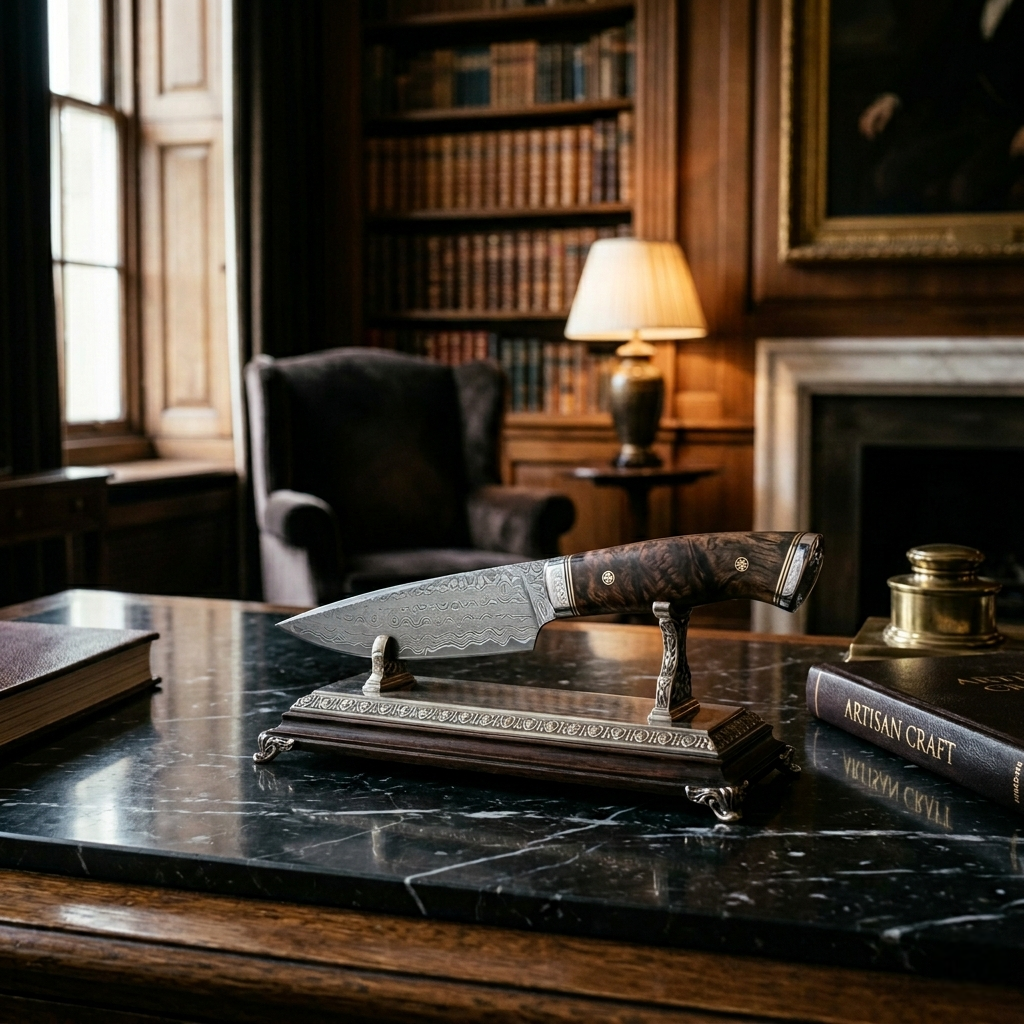
The knives were just there—one by one, gathered over time, placed carefully but without a clear plan. I would adjust them slightly, move one closer to the light, turn another just enough to catch a different reflection. It felt instinctive, not intentional.
But one evening, I stepped back and noticed something I hadn’t seen before.
They weren’t just objects anymore.
They were connected.
It started with a single piece I couldn’t ignore. Not because it was the most intricate or the most refined, but because it held a kind of quiet presence. The blade caught the light unevenly, almost like it was shifting as I looked at it. The handle felt grounded, slightly warmer than I expected.

I kept returning to it.
Not to use it, just to understand it.
Over time, I added others. Not in a rush, never all at once. Each one entered the space differently. Some demanded attention immediately. Others took longer to reveal themselves. But I noticed something subtle—each piece changed how I saw the ones around it.
That’s when the collection stopped being a collection.
And started becoming a composition.
I began arranging them more deliberately.
Not by size or category, but by feeling. A darker blade next to something lighter. A textured handle beside a smoother one. I wasn’t thinking in terms of contrast at first, but that’s what it became.
Contrast creates movement.
Without it, everything blends together. With too much, nothing feels connected. The balance sits somewhere in between, where differences don’t compete but interact.
I learned that slowly.
Sometimes by getting it wrong.
Materials became part of the story in a way I hadn’t expected.
Steel, of course, is always central. But not all steel feels the same. Some surfaces reflect light sharply, almost cold. Others diffuse it, creating a softer presence. That difference changes the entire mood of the display.
Handles matter just as much.
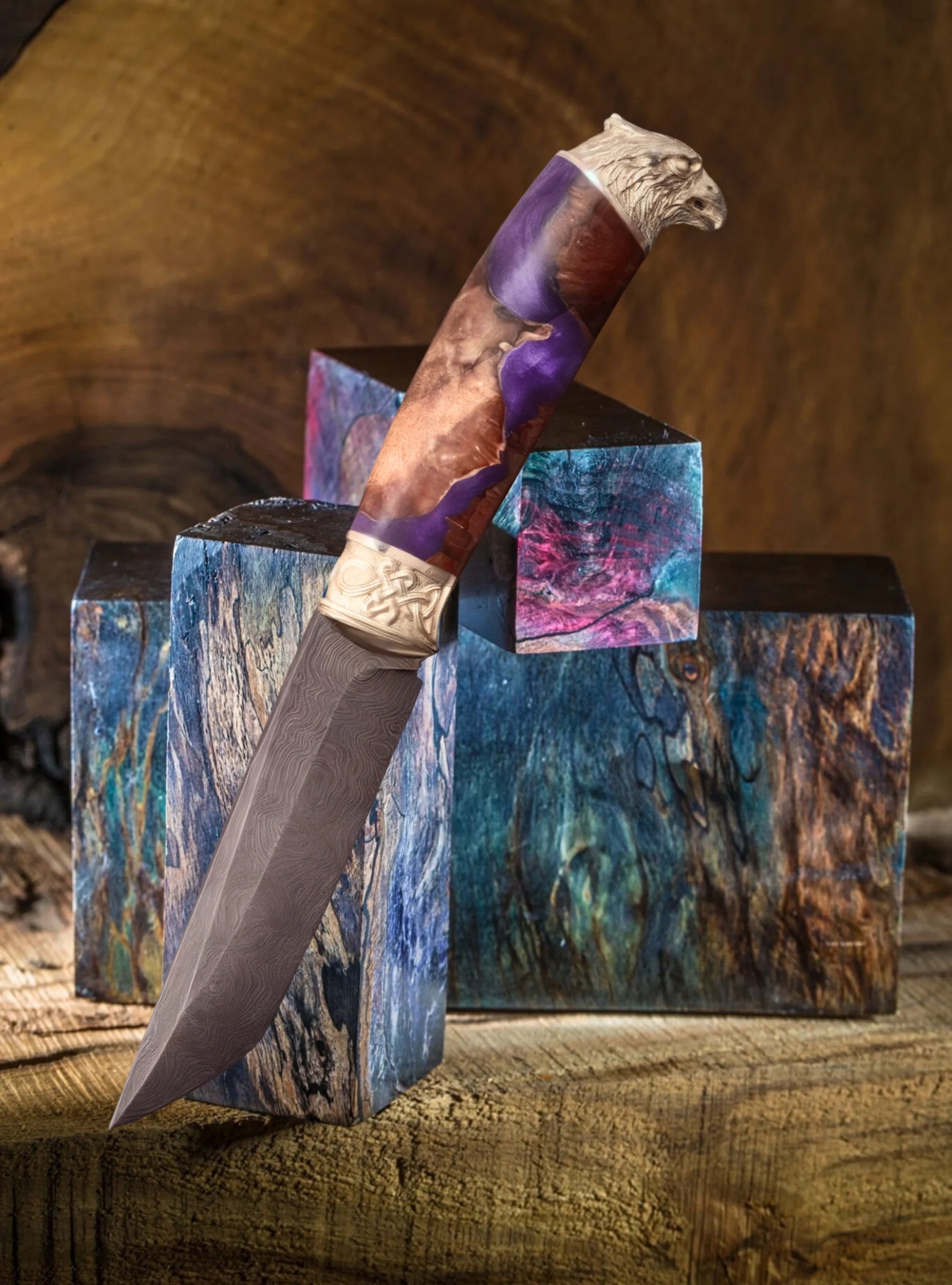
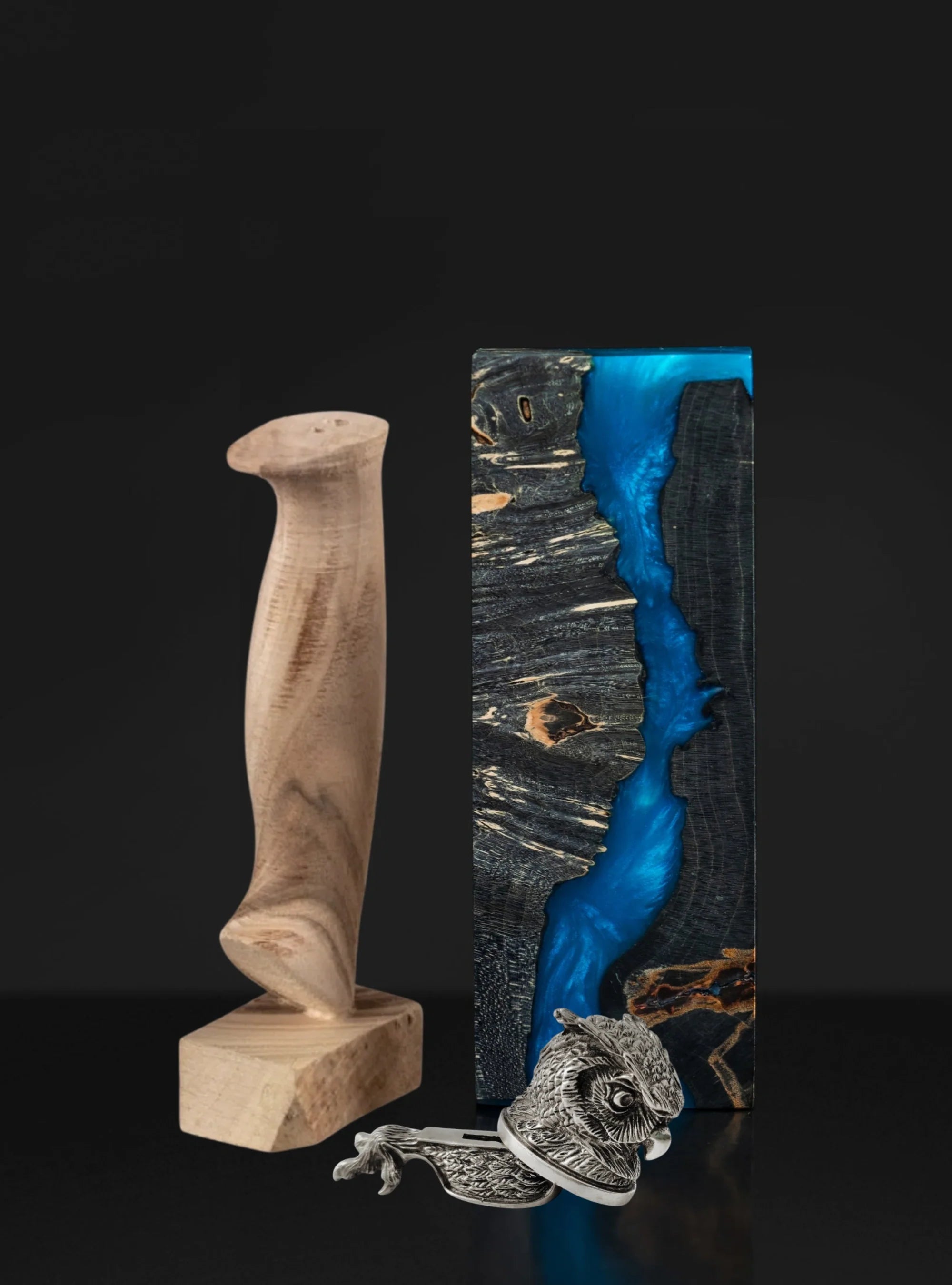
Wood carries warmth, even visually. It softens the blade, grounds it. Other materials feel more structured, more defined. When you place them together, they don’t just sit side by side—they respond to each other.

You start to see relationships, not just objects.
I remember rearranging everything one afternoon, trying to create something more “perfect.”
Aligning edges, spacing everything evenly, making sure nothing felt out of place. It looked clean. Controlled. Almost like a display you’d expect to see behind glass.
And I didn’t like it.
It felt distant.
That’s when I understood something I hadn’t considered before.
Perfection removes tension.
And without tension, there’s no story.
So I let things shift slightly.
A blade angled just enough to break symmetry. A handle placed closer than expected. Small imperfections in spacing that created a sense of movement instead of stillness.
It felt more alive.
Not chaotic—just less rigid.
That subtle imbalance made the collection feel human.
Light became the final element.
I hadn’t planned for it, but once I noticed how it changed everything, I couldn’t ignore it. Natural light moves throughout the day, revealing different details at different times. A blade that looks quiet in the morning might feel almost luminous by evening.
And that transformation adds another layer.
You’re not just looking at a static arrangement.
You’re watching something shift.
Over time, I realized that what I was creating wasn’t about knives at all.
It was about rhythm.
How one piece leads to another. How your eye moves across the collection without stopping abruptly. How certain elements repeat just enough to create cohesion, but not so much that it becomes predictable.
That rhythm is what holds everything together.
Without it, even the most beautiful pieces feel disconnected.
There are still moments where I question certain choices.
Pieces that feel slightly out of place. Combinations that don’t quite resolve. And I’ve learned not to fix those immediately. Sometimes, that discomfort is part of the process.

It forces you to look longer.
To reconsider.
And sometimes, what feels wrong at first becomes essential later.
Not everything works, though.
Some pieces, no matter how interesting on their own, don’t integrate well into the whole. They interrupt the flow instead of contributing to it. I’ve had to remove things I liked individually because they didn’t belong in the larger composition.
That part is difficult.
But necessary.
Because a collection isn’t just about what you include.
It’s also about what you choose to leave out.
What surprised me most is how this changed the way I see objects in general.
I stopped looking at them in isolation.
Everything became part of a larger visual language. Texture, light, proportion—these things started to matter beyond their individual context. They became tools for creating something more cohesive.
Something that feels intentional, even if it wasn’t planned from the beginning.
So who is this really for?
Not for someone who wants a perfect display.
Not for someone who measures value only in rarity or detail.
It’s for someone who’s willing to observe.
To move things slowly, to let the arrangement evolve, to accept that meaning doesn’t appear immediately. It builds over time, through small adjustments and quiet decisions.
Would I recommend approaching a knife collection this way?
Yes—but only if you’re comfortable letting it remain unfinished.
Because the moment you think the story is complete, it stops moving. And what makes it meaningful isn’t the final arrangement.
It’s the process of seeing it change.
Share:
What Modern Knife Collecting Really Feels Like?
Future Trends in Knife Aesthetics for Your Home Collection