

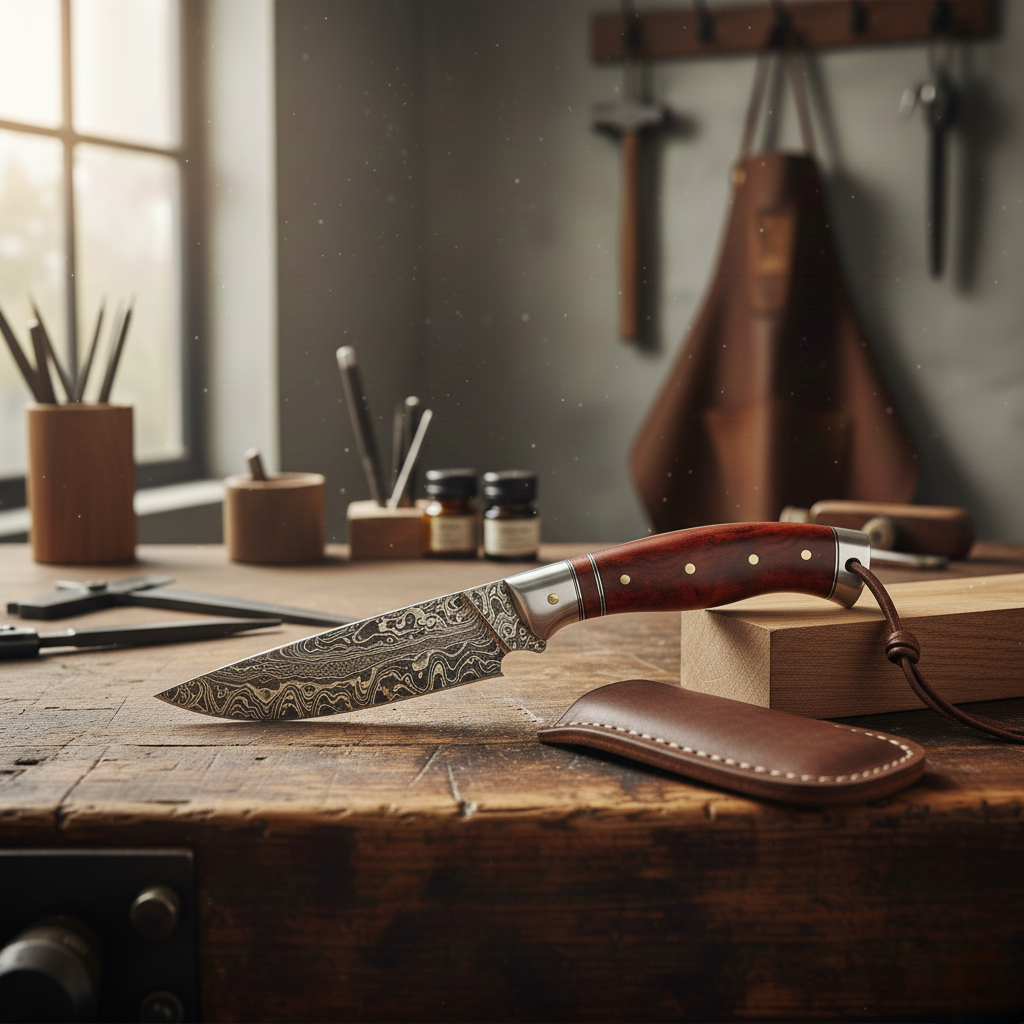
High-end knives are often presented as works of art—combining performance, aesthetics, and heritage. However, not every knife labeled “luxury” truly reflects superior craftsmanship. Knowing how to identify poor workmanship helps protect your investment and ensures you’re purchasing a knife worthy of its price and reputation.
Below are the key signs that reveal substandard craftsmanship in supposedly high-end knives.
How to Spot Poor Craftsmanship in High-End Knives?
1. Inconsistent Blade Geometry
Precision is the foundation of a well-made knife.
-
Uneven blade thickness
-
Asymmetrical grinds
-
Inconsistent bevel lines
Luxury knives should display flawless symmetry and intentional geometry, reflecting careful hand-finishing or precise machining.

2. Poor Steel Finish and Surface Quality
The blade’s surface tells a story.
-
Visible scratches or sanding marks
-
Cloudy or uneven polish
-
Inconsistent stonewash or satin finish
High-end knives are meticulously finished, with clean transitions and smooth surfaces free from careless marks.
3. Weak Handle-to-Blade Fit
One of the clearest red flags is poor fitment.
-
Gaps between handle scales and tang
-
Misaligned pins or fasteners
-
Sharp edges where surfaces should be flush
In premium knives, every joint is seamless—no gaps, no rough transitions.

4. Cheap or Inappropriate Handle Materials
Luxury craftsmanship requires premium materials.
-
Low-grade wood prone to cracking
-
Plastic-like synthetics disguised as luxury materials
-
Poorly stabilized natural materials
High-end knives use carefully selected woods, horn, bone, micarta, or stabilized materials that age gracefully and feel balanced in hand.
5. Uneven or Poorly Set Pins and Rivets
Hardware reveals attention to detail.
-
Pins not flush with the handle
-
Visible tool marks
-
Loose or spinning fasteners
Properly finished pins should be smooth, flush, and visually harmonious with the handle.
6. Imbalanced Weight and Poor Ergonomics
Luxury knives must feel right in the hand.
-
Blade-heavy or handle-heavy imbalance
-
Awkward grip contours
-
Hot spots during handling
True craftsmanship considers both aesthetics and prolonged comfort.

7. Inaccurate or Decorative-Only Heat Treatment
Steel performance depends on heat treatment.
-
Blade chips easily or loses edge quickly
-
Overly soft or brittle steel
-
No transparency about heat-treatment process
Reputable high-end makers are proud of their heat treatment and openly share specifications.
8. Sloppy Spine, Choil, and Edges
Overlooked areas often expose shortcuts.
-
Sharp or unfinished spine edges
-
Rough choil transitions
-
Inconsistent edge polish
Luxury knives feature softened spines and refined choils for both comfort and elegance.
9. Overemphasis on Branding Over Craft
Marketing should never replace craftsmanship.
-
Excessive logos or decorative elements hiding flaws
-
Inflated prices without technical justification
-
Generic designs presented as exclusive
True high-end knives let craftsmanship speak louder than branding.
10. Lack of Provenance or Maker Transparency
Authenticity matters.
-
No information about the maker or workshop
-
Vague material descriptions
-
Missing serial numbers or certificates
Luxury knives are often traceable, signed, or documented—proof of accountability and pride.
Final Thoughts
True high-end knives are defined by precision, integrity, and thoughtful craftsmanship—not by labels or price tags. By learning to spot signs of poor workmanship, you protect both your investment and your appreciation for genuine artistry. In luxury knife making, excellence is always visible to the trained eye—and felt in the hand.
Share:
What It Takes to Create a Luxury Handmade Knife?
Common Mistakes Collectors Make with Exclusive Luxury Knives