

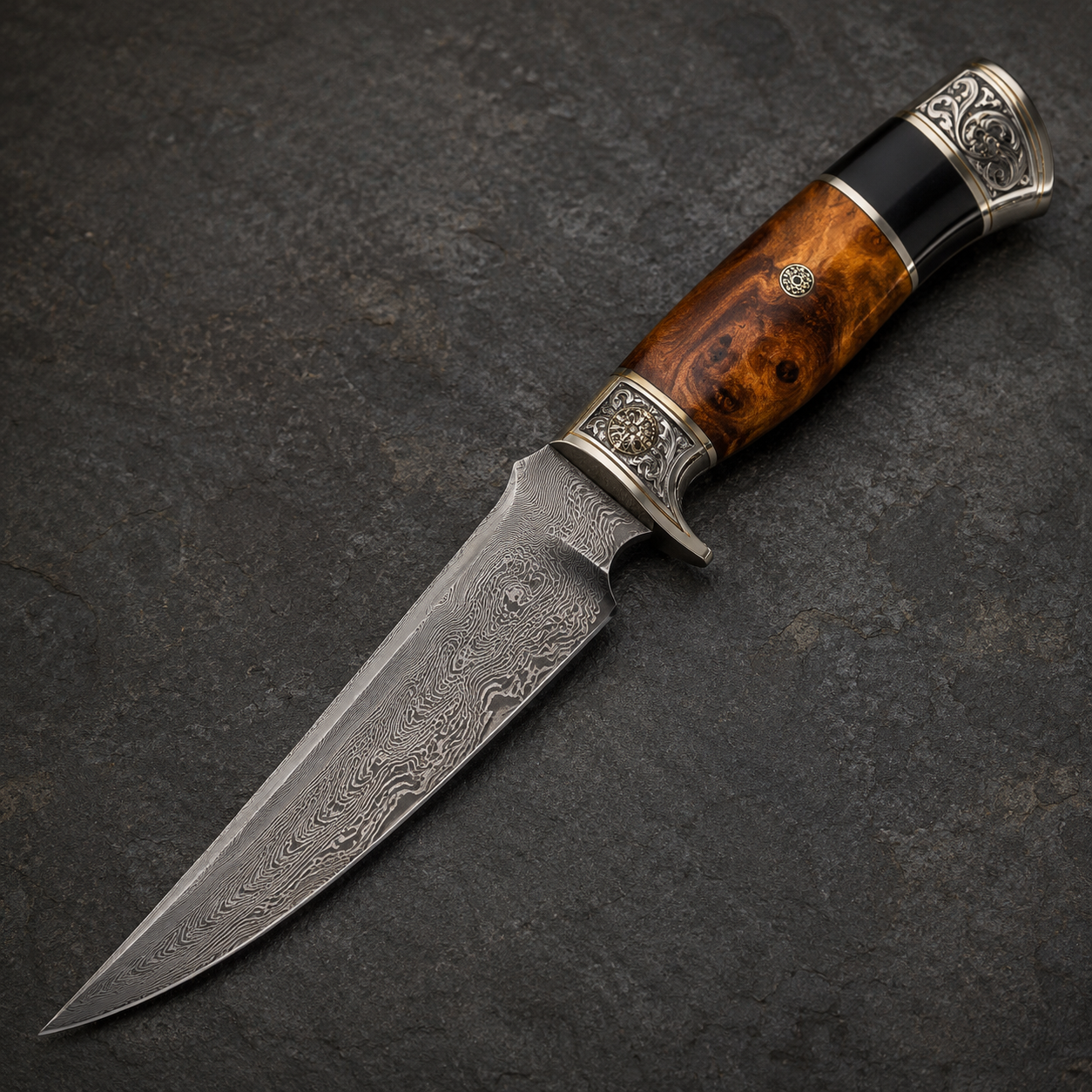
The first collectible knife I truly admired wasn’t the most expensive one in the room.
In fact, beside some of the more elaborate pieces, it looked almost restrained. No excessive decoration. No dramatic engraving covering every surface. Just balanced proportions, subtle materials, and a shape that felt unusually complete.
I kept returning to it anyway.
Not because it demanded attention, but because it held it quietly.
That experience changed the way I think about value in collectible knives. I stopped seeing value as something tied only to rarity or materials. Design influences it just as deeply—sometimes more.

And not in the obvious ways people expect.
At first glance, many luxury collectible knives appear similar.
Polished steel, refined handles, carefully finished details. But after spending time around collectors and makers, I realized design isn’t about how complicated a knife looks.
It’s about cohesion.
Whether every part feels connected to the same idea.
You notice this immediately when it’s missing. A knife can contain expensive materials and still feel strangely unresolved if the proportions or transitions don’t work together.
That tension lowers perceived value faster than people realize.
Proportion became the first thing I started noticing instinctively.
The relationship between blade and handle changes the entire personality of the knife. Some designs feel front-heavy visually, others overly delicate. When balance is wrong, even beautiful craftsmanship starts feeling uncomfortable.

Good proportion creates calm.
The knife feels intentional before you even touch it.
And collectors respond to that almost subconsciously.
Handle design affects value more than most people expect too.
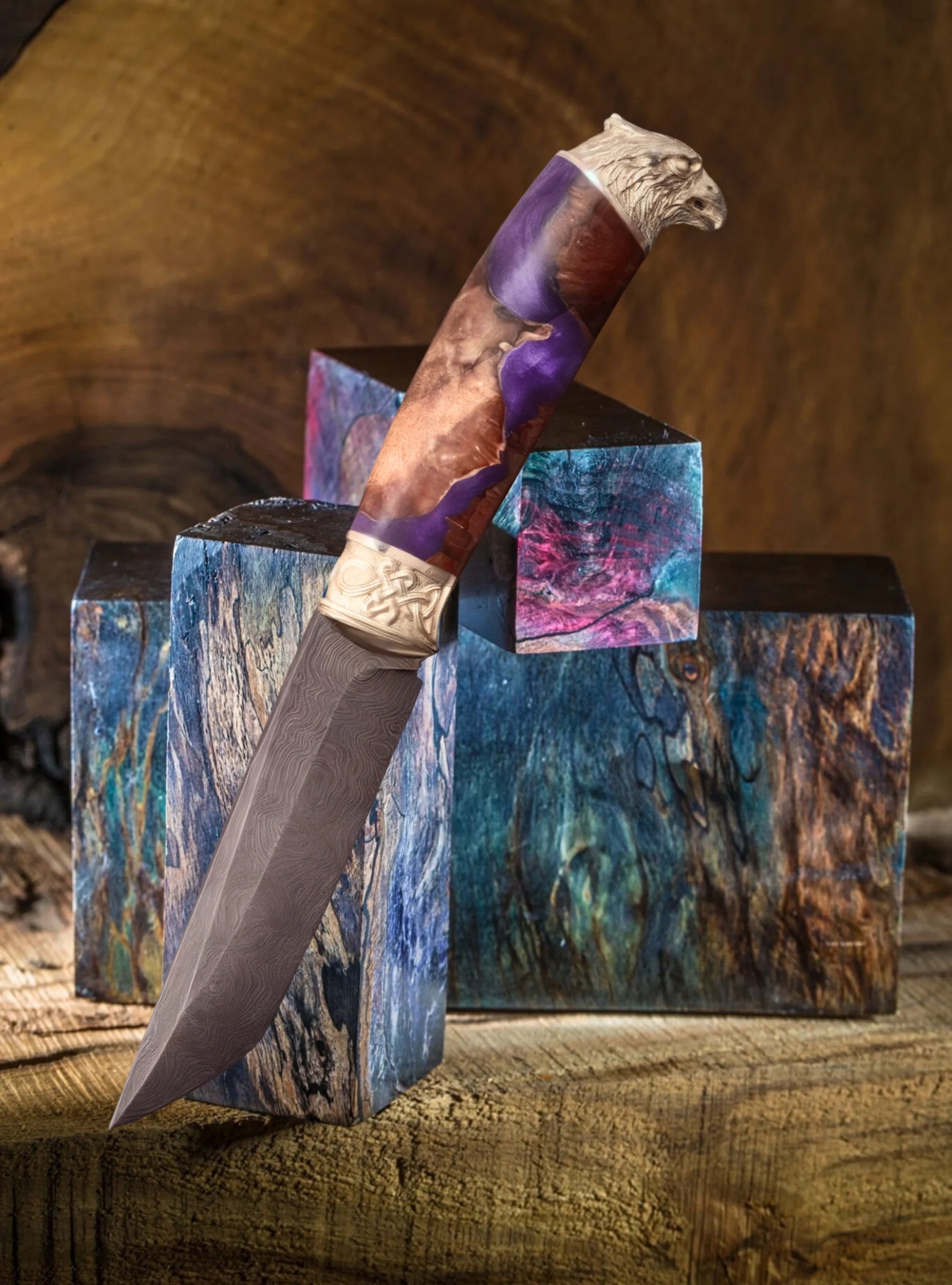
Not just shape, but how the material interacts with the form itself. A dramatic handle can elevate a simple blade—or overwhelm it completely. The best designs allow materials to support the knife instead of competing for attention.
I’ve seen knives where rare handle materials actually reduced elegance because the design tried too hard to showcase them.
Luxury becomes less convincing when it feels desperate to impress.
The transition points reveal real design quality.
Where blade meets handle. Where textures shift. Where contours change direction. These moments determine whether the knife feels cohesive or assembled from separate ideas.
Factory knives often prioritize consistency here.
Handmade collectible knives prioritize interpretation.
That difference changes emotional response completely.
I also learned that restraint increases long-term value surprisingly often.
At first, highly decorative knives feel exciting. Intricate engraving, layered materials, dramatic shapes—they create immediate visual impact. But over time, some of these designs lose depth because everything is revealed instantly.
More restrained designs age differently.
The longer you study them, the more intentional they begin to feel.
Collectors tend to return to those pieces repeatedly because they don’t exhaust visual interest immediately.

Function still matters—even in collectible knives.
This surprised me.
I assumed purely collectible pieces could ignore usability completely. But knives that lose all sense of practical logic often feel less convincing, even as art objects. A collectible knife doesn’t need to be heavily used, but the design usually benefits from respecting the object’s original purpose.
That tension between utility and artistry creates authenticity.
Without it, some designs start feeling decorative in a shallow way.
Material choice changes value too, but mostly through interaction with design.
Rare materials alone don’t create meaningful luxury. What matters is whether the design allows those materials to express something naturally. Some woods look richer in simpler forms. Certain finishes only work when paired with restrained geometry.
Strong design understands this relationship.
Weak design uses expensive materials as distraction.
Collectors notice the difference eventually.
I’ve also realized that originality influences value differently than novelty.
Novelty seeks reaction.
Originality creates identity.
A knife can introduce unusual shapes or concepts and still feel timeless if the design language remains coherent. But designs chasing uniqueness too aggressively often age poorly because they depend on surprise rather than balance.
That distinction matters more over time.
Especially in collections meant to last decades.
What surprised me most is how emotional good knife design feels.
Certain knives create immediate attachment without obvious explanation. The balance feels right. The silhouette feels resolved. Even small details seem calm and confident.
You stop analyzing individual elements and start responding to the knife as a complete object.
That emotional response influences value enormously because collecting is rarely driven by logic alone.
I’ve handled collectible knives that were technically flawless but emotionally empty.
And others with small imperfections that felt unforgettable because the design carried personality so naturally.
That taught me something important:
Perfection doesn’t always create value.

Presence does.
Now, when I look at luxury collectible knives, I pay less attention to decoration and more attention to design relationships.
How the knife moves visually from one section to another. Whether the materials support the form. Whether the proportions create tension or harmony. Whether the knife still feels interesting after the first impression fades.
Because the strongest collectible designs don’t just look expensive.
They feel resolved.
And that feeling is what quietly transforms a knife from an object into something collectors continue valuing long after trends disappear.
Share:
Why are Handmade Luxury Collectible Knives Expensive?
How Craftsmanship Affects Value of Designer Knife?