

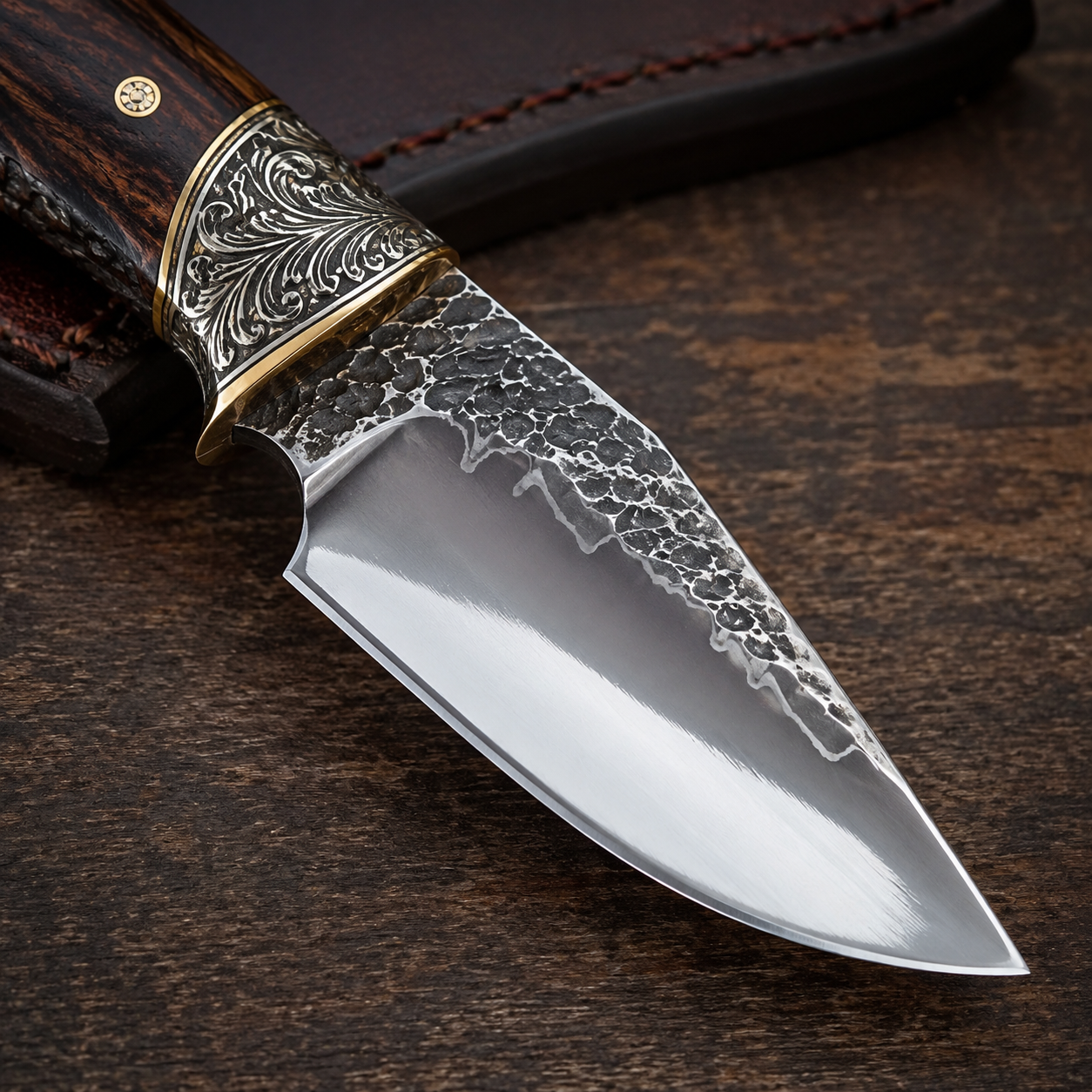
The first designer knife I held that truly impressed me didn’t look aggressive or overly complicated.
In fact, the details that made it feel valuable were almost invisible at first.
The transition between the blade and handle felt seamless. The balance sat naturally in the hand. Even the opening and closing movement had a kind of quiet precision to it. Nothing called attention to itself directly, but everything felt resolved.
That experience changed how I understood craftsmanship.
I stopped seeing it as decoration or technical perfection alone. Real craftsmanship affects value because it changes the entire emotional experience of the object.
Not just how it looks.
But how it feels to live with.
Before spending time around handmade or designer knives, I assumed value came mostly from materials.Exotic handle woods. Premium steels. Rare finishes.

And yes, those things matter. But I’ve seen expensive materials assembled in ways that still felt strangely empty. The knife looked impressive in photographs yet lacked coherence in person.
Craftsmanship is what transforms separate components into something unified.
Without it, even costly materials feel disconnected.
Fit and finish became the first thing I started noticing instinctively.Small gaps, uneven transitions, rough edges around hardware—these details immediately reduce perceived value, even for people who can’t explain why. Human hands recognize inconsistency faster than we consciously realize.
A well-crafted knife feels calm because nothing interrupts the experience unnecessarily.
The surfaces flow naturally into one another.
That smoothness creates trust.
Blade finishing affects emotional response more than I expected too.Certain finishes reflect light softly, emphasizing shape and geometry rather than shine alone. Others feel overly polished in a way that hides personality. Handmade finishes often carry slight variation that makes the knife feel more alive and individual.
Machine perfection can sometimes feel emotionally flat.
Subtle human irregularity often creates character instead.
That balance is difficult to achieve intentionally.
Handle shaping reveals craftsmanship immediately once you start paying attention.A beautiful material means very little if the handle feels awkward in motion. Good craftsmanship shapes the knife around natural grip and visual balance simultaneously.
That’s harder than it sounds.

Some handles look impressive but become tiring quickly during actual use. Others appear simple yet feel incredibly natural because the maker understood ergonomics deeply.
Comfort itself becomes part of the knife’s value.
Edge geometry taught me another important lesson.Two knives can use similar steel yet perform completely differently depending on sharpening precision and blade shaping. Craftsmanship influences how the knife cuts, maintains its edge, and responds during use.
You feel that difference instantly.
Not in dramatic ways necessarily.
But through control, smoothness, predictability.
The knife begins feeling dependable rather than merely decorative.
I also realized craftsmanship affects longevity emotionally as much as physically.Poorly assembled knives often lose their appeal once tiny flaws begin appearing. Loose fittings, uneven wear, mechanical inconsistency—small issues accumulate until the object no longer feels special.
Well-crafted knives age differently.
They develop character without losing integrity.
That graceful aging increases attachment over time instead of reducing it.
Handmade details carry a different emotional weight too.Not because handmade automatically means better, but because intentional handwork often leaves traces of human decision-making throughout the object. Slight asymmetry. Gentle variation in finishing. Tiny evidence that someone adjusted details rather than relying entirely on automated repetition.
Those imperfections create individuality.
And individuality influences collector value strongly.
What surprised me most is how craftsmanship changes silence.Poor craftsmanship creates tiny interruptions constantly: rough opening actions, imbalance, uncomfortable edges, visual tension between materials.
Good craftsmanship removes interruption.
The object feels effortless to interact with.
That absence of friction creates luxury more effectively than elaborate styling ever could.
I’ve handled knives with dramatic designs that lost impact quickly after closer inspection.And I’ve handled quieter knives that became more impressive the longer I spent with them because the craftsmanship revealed itself gradually through use.
That slow discovery creates lasting value.
Collectors return to those objects repeatedly because appreciation deepens over time instead of fading after the first impression.
One thing I’ve learned is that craftsmanship isn’t about making a knife look expensive.It’s about making every detail feel intentional.

The alignment.
The balance.
The transitions.
The movement.
The restraint.
When all those things work together naturally, the knife gains presence that materials alone can’t create.
Now, when I think about the value of designer knives, I rarely focus on rarity first.I think about execution.
Whether the craftsmanship supports the design completely or fights against it. Whether the knife still feels satisfying after repeated handling. Whether the maker understood not only aesthetics, but interaction.
Because craftsmanship affects value by shaping experience itself.
And ultimately, that experience is what transforms a designer knife from an object people admire briefly into one they continue valuing for years.
Share:
How Design of Luxury Collectible Knives Influences Value?
How to Start a Designer Knife Collection?