


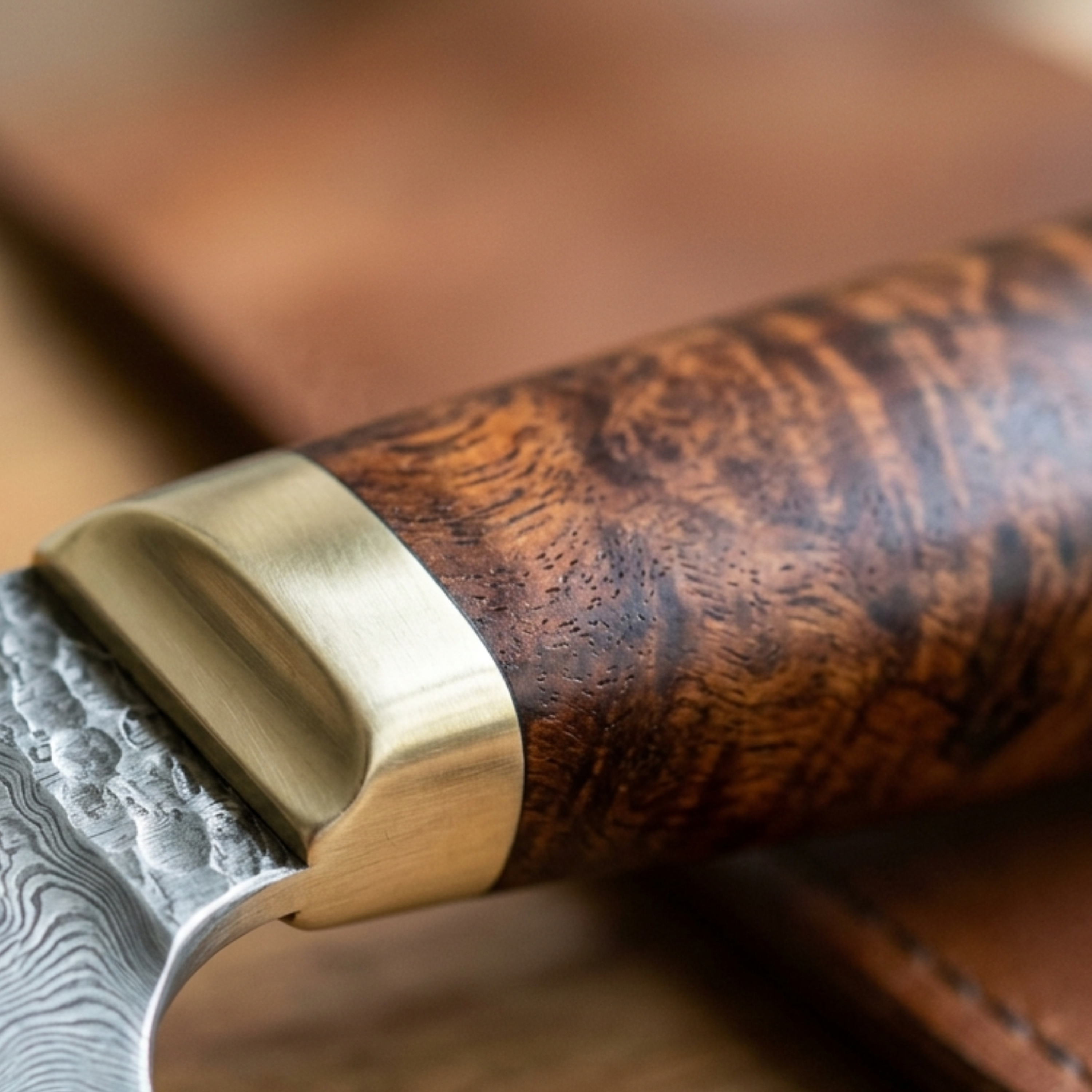
Luxury knives are not only about design and materials—they are defined by how secure, stable, and controlled they feel in the hand. Safety and grip stability are critical, especially when precision and confidence matter most.
This guide explains what makes a knife safe to handle and how grip design influences performance.
Safety and Grip Stability of Luxury Knives
Why Grip Stability Matters?
A knife’s grip directly affects:
- Control during use
- Accuracy of cuts
- Overall safety
Even a beautifully crafted knife can become risky if it lacks proper grip stability.

1. Ergonomic Handle Design
The shape of the handle determines how naturally the knife fits your hand.
Look for:
- Contoured shape that follows hand anatomy
- Comfortable positioning of fingers
- Balanced pressure distribution
Result:
Better control and reduced hand fatigue.
2. Surface Texture and Finish
Texture plays a major role in grip security.
Options include:
- Smooth polished surfaces
- Lightly textured finishes
- Natural materials with subtle grip
Insight:
Too smooth can slip, too rough can feel uncomfortable—the best designs find a balanced texture.
3. Handle Material and Grip Feel
Different materials affect grip in different conditions.
Consider:
- Natural materials for warmth and comfort
- Composite materials for consistency
- Surface treatment for added control
The goal is a handle that remains stable even with moisture or prolonged use.

4. Balance Between Blade and Handle
Proper balance enhances both safety and control.
What to check:
- Even weight distribution
- No forward or backward heaviness
- Natural handling without strain
A balanced knife feels predictable and stable in motion.
5. Guard and Finger Protection
Some designs include features that prevent slipping.
Examples:
- Subtle guard or bolster
- Finger grooves
- Slight handle flares
Benefit:
These features help keep your hand securely in place.
6. Grip Stability in Different Conditions
A knife should perform well in various environments.
Test:
- Dry grip
- Slightly damp conditions
- Extended use
Consistency across conditions is a sign of thoughtful craftsmanship.
7. Handle Length and Proportion
Size affects control.
Ideal handle:
- Fits your hand comfortably
- Allows full grip without crowding
- Matches the size of the blade
Proper proportion improves both comfort and safety.
8. Smooth Transitions and Edges
Sharp or uneven edges can affect grip.
Look for:
- Rounded transitions
- No harsh edges
- Seamless construction
This ensures the knife feels natural and secure in hand.
9. Control During Movement
Grip stability isn’t just static—it matters in motion.
Key aspects:
- No slipping during cutting
- Consistent control through movement
- Confidence in handling
A stable grip allows for precise, controlled actions.

10. Long-Term Comfort and Fatigue
A good grip reduces strain over time.
Signs of quality:
- No pressure points
- Comfortable during extended use
- Natural hand positioning
Comfort contributes directly to safe and effective use.
Common Mistakes to Avoid
- Choosing based only on appearance
- Ignoring handle ergonomics
- Overlooking grip texture
- Using a knife that feels unstable in hand
These can compromise both safety and performance.
Final Thoughts
Safety and grip stability are essential elements of any luxury knife.
They depend on:
- Ergonomic design
- Material choice
- Balance and proportion
- Attention to detail
A well-designed knife should feel like a natural extension of your hand—secure, controlled, and effortless to use.
Share:
Color Combinations in Knife Design
Future of Luxury Knives Collecting