

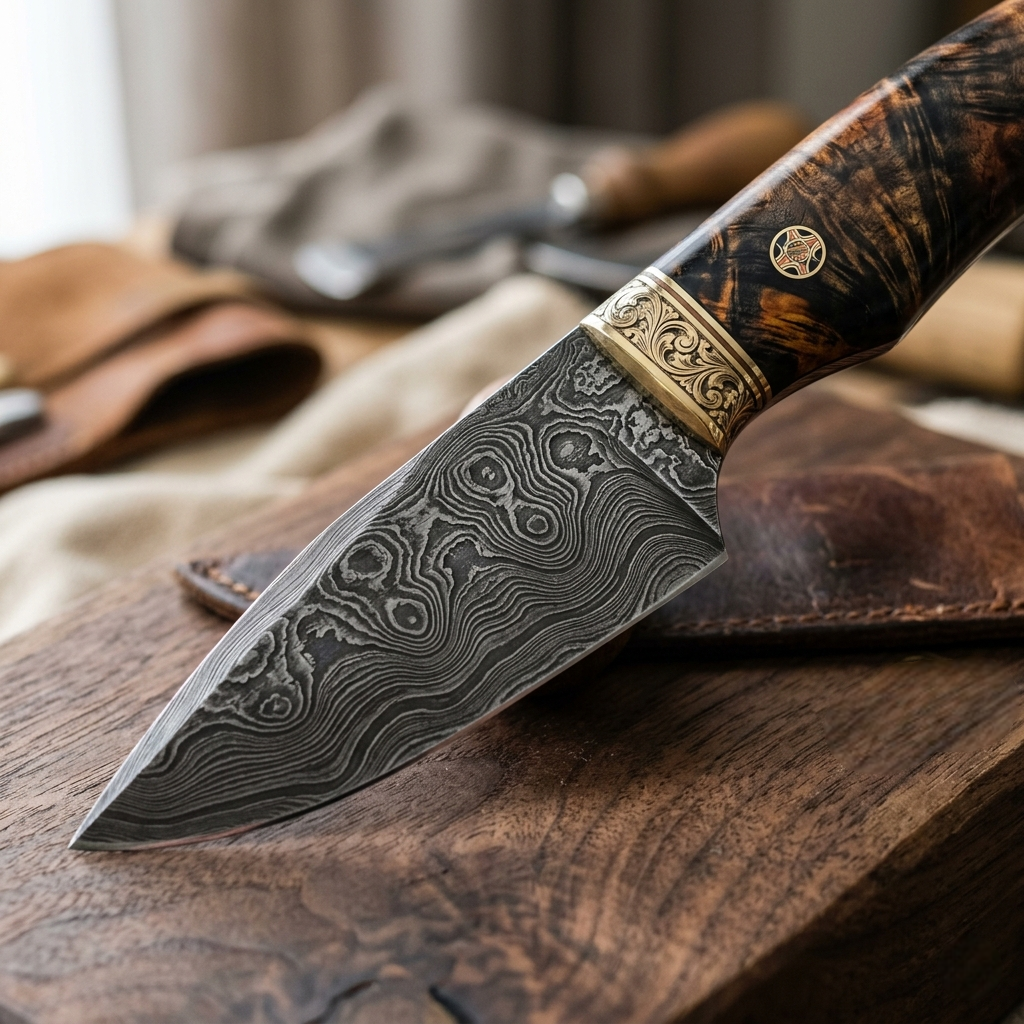
It wasn’t displayed behind glass or introduced with ceremony. It sat quietly among more ordinary pieces, but something about it pulled me in. The balance, maybe. Or the way the light moved across the blade—not sharply, but with a kind of depth I hadn’t seen before. I picked it up, and for a moment, everything else faded. It didn’t feel like a tool. It felt like an object with a story I didn’t yet understand.
That was the beginning of my collection, though I didn’t call it that at the time.
I just knew I wanted to feel that again.
At first, I approached it the wrong way. I thought collecting meant accumulating—more knives, more styles, more brands. I spent hours looking at different designs, convincing myself I needed variety before I even understood what I liked. But the more I bought, the less each piece meant.

It took a while to realize that a collection isn’t built on quantity. It’s built on attention.
The shift happened when I slowed down.
Instead of asking “What should I buy next?” I started asking “Why does this piece matter?” That question changed everything. I began noticing details I had overlooked before—the subtle curve of a blade, the way a handle fits into the palm, the transition between materials.
Luxury knives, I learned, are less about appearance and more about intention.
Take steel, for example. At the beginning, it all felt the same to me—just metal shaped into a blade. But over time, I started to notice differences. Some blades held an edge longer, others felt smoother as they moved through material. Then I encountered Damascus steel, and it completely shifted my perspective.
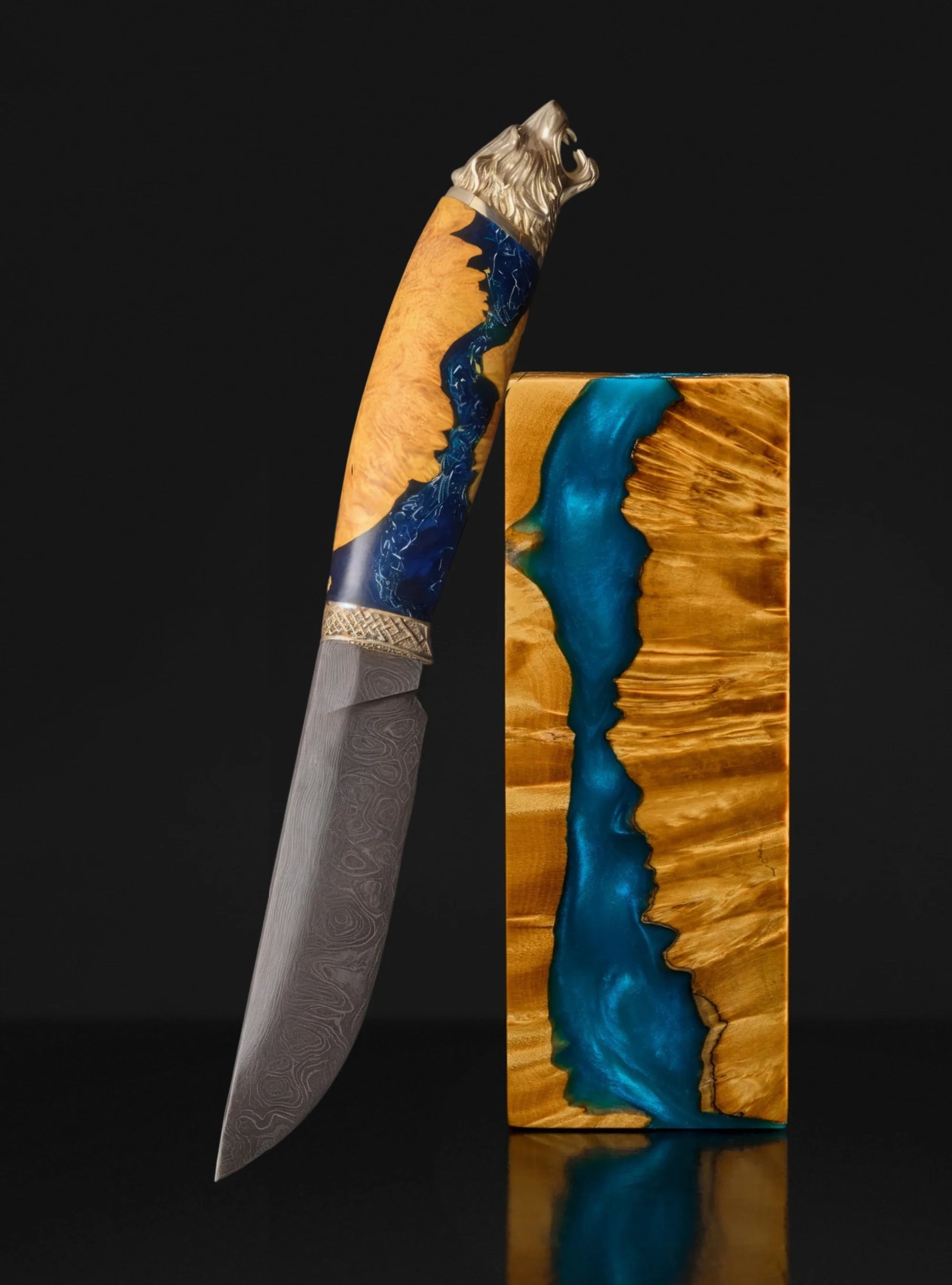
It wasn’t just about performance. It was visual, almost emotional. The layered patterns told a story of how the blade was made—folded, forged, shaped with care. It felt less industrial, more human.
But I also learned not to romanticize everything.
Some knives look extraordinary but feel disconnected when you actually hold them. The handle might be beautiful but slightly uncomfortable. The balance might be off just enough to make the experience feel forced. These are things you can’t fully understand from images.

You have to interact with the piece.
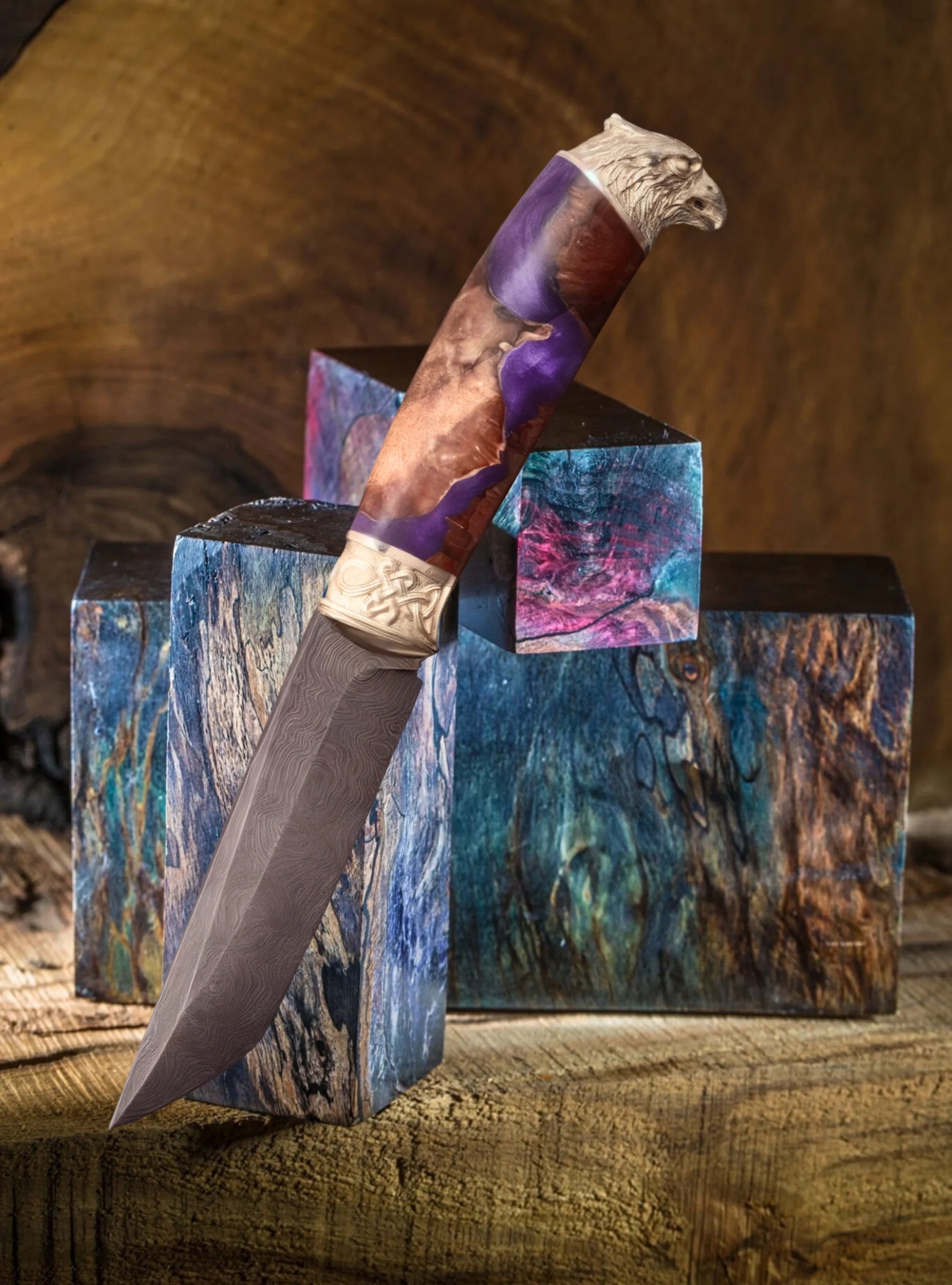
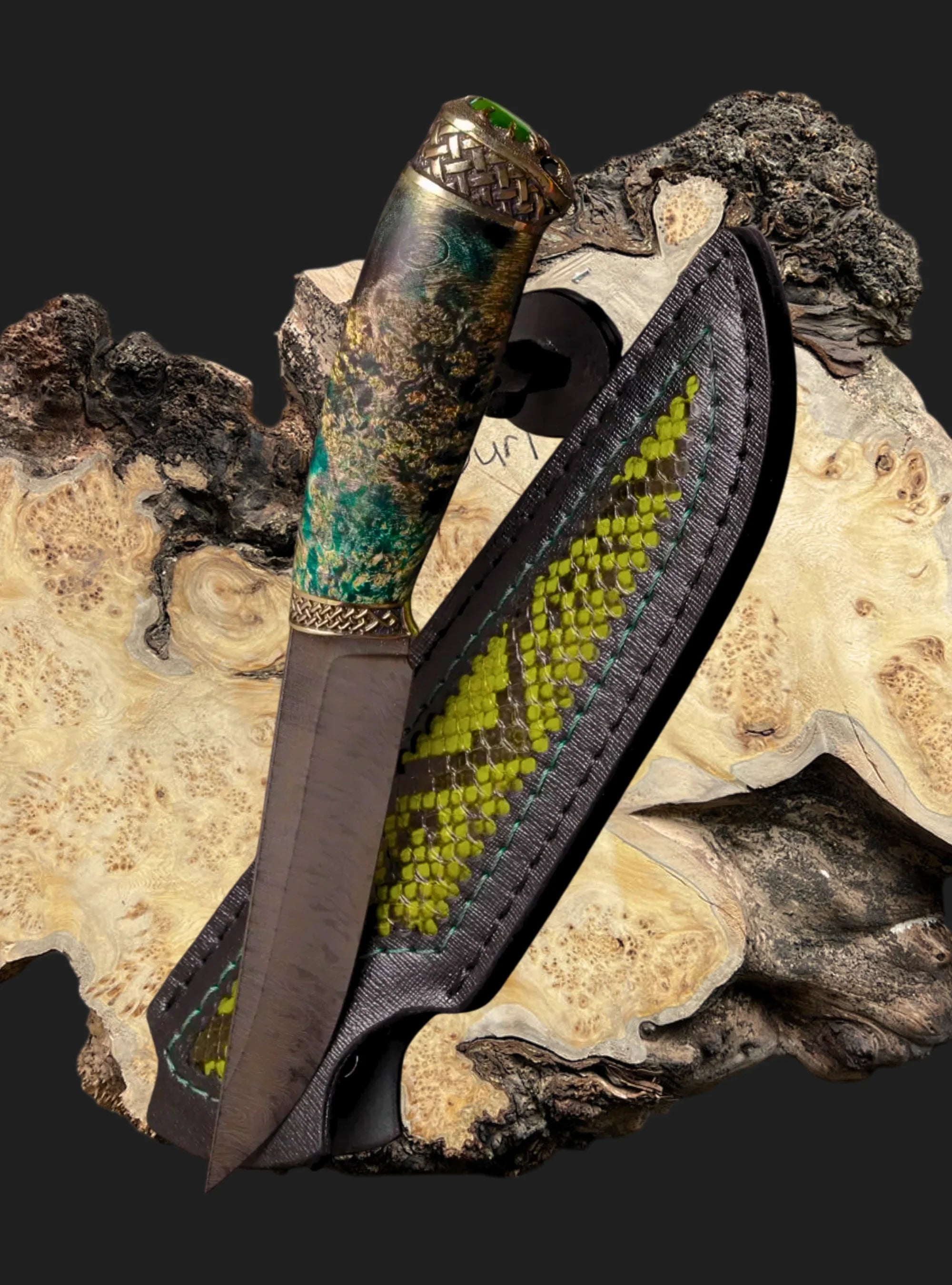
Handles, in particular, taught me a lot about what I value. I used to focus only on how they looked—polished wood, intricate textures, unique colors. But over time, I started paying attention to how they aged. Materials like stabilized wood or micarta develop character in subtle ways. They don’t stay perfect, and that’s part of their appeal.
There’s something honest about a handle that shows use.
Design is another layer that reveals itself slowly. At first glance, many knives seem similar—blade, handle, maybe a decorative detail. But the more you look, the more differences emerge. Some designs feel timeless, almost quiet in their confidence. Others try to stand out, sometimes successfully, sometimes not.
I found myself drawn to pieces that didn’t demand attention but held it anyway.
That’s harder to define than it sounds.
Usability also plays a role, even in a luxury collection. I used to think collectible knives should remain untouched—displayed, preserved, admired from a distance. And while some pieces do feel that way, I realized I connect more deeply with knives I actually use, even occasionally.
Not for anything extreme. Just enough to understand them.
The way a blade moves, the way it responds, the way it feels after repeated use—these things create a relationship. Without that, a knife can feel more like an object than a presence.
But collecting isn’t without its challenges.
It’s easy to get pulled into trends. Limited editions, popular makers, designs that suddenly appear everywhere. At one point, I caught myself wanting a knife not because I liked it, but because it felt like I should.
That’s a dangerous place to be.
A collection built on external validation loses its identity. It starts to reflect what’s popular instead of what’s personal. I had to step back and let go of that mindset, even if it meant missing out on certain pieces.
Another challenge is knowing when to stop.
There’s always something new to discover. New materials, new designs, new interpretations of old ideas. The temptation to keep adding never really goes away. But I’ve learned that a collection doesn’t need to be large to feel complete.
Sometimes, a few carefully chosen pieces carry more meaning than dozens collected without intention.
If I had to start over, I’d do it differently.
I’d begin with one knife that truly resonates—not the most expensive, not the most popular, but the one that feels right in your hand. I’d spend time with it. Understand it. Let it shape my preferences before moving on.
I’d also pay more attention to makers, not just products. The story behind a knife—the person who designed it, the philosophy they bring to their work—adds depth that you can’t replicate with mass-produced pieces.
That connection matters more than I expected.
At the same time, I wouldn’t overcomplicate the beginning. It’s easy to get lost in technical details—steel types, hardness ratings, manufacturing methods. Those things are important, but they make more sense once you have some experience.
In the beginning, feeling is enough.
There are also small practical things I wish I had understood earlier. Storage, for example. Keeping knives in good condition isn’t complicated, but it requires attention. Moisture, friction, even how they’re placed next to each other—it all adds up over time.
Maintenance becomes part of the experience, not a separate task.
And yes, luxury knives can be expensive.
That’s something you can’t ignore. But I’ve learned that price doesn’t always align with connection. Some of my most meaningful pieces aren’t the most valuable in monetary terms. They’re the ones that marked a moment, a shift, a realization.

That’s what stays.
So who is this really for?
Not everyone needs a knife collection. For many people, a single, reliable tool is enough—and there’s something admirable about that simplicity.
But if you find yourself drawn to the details, to the subtle differences, to the stories behind objects—then collecting can become something more than ownership. It becomes a way of understanding craftsmanship, of slowing down, of noticing things most people overlook.
Would I recommend it?
Yes, but with a condition.
Don’t start with the idea of building a collection. Start with curiosity. Let it grow naturally, piece by piece, without pressure to complete anything.
Because in the end, the most meaningful collections aren’t the ones that look impressive.
They’re the ones that feel personal every time you pick something up.
Share:
Future of Luxury Knives Collecting
What Modern Knife Collecting Really Feels Like?