


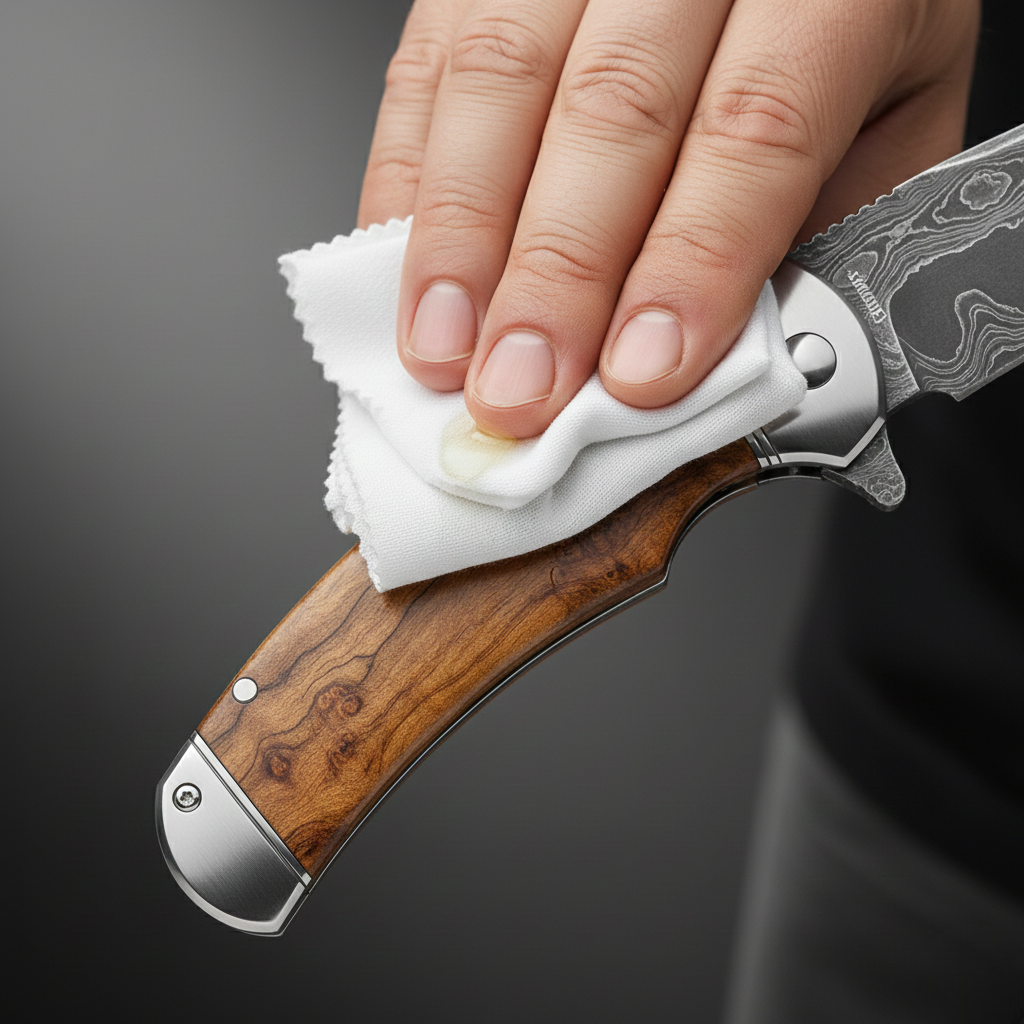
Wooden handles are a defining feature of many luxury and collectible knives. They add warmth, character, and individuality—but as natural materials, they require occasional care to remain beautiful and stable over time.
Oiling wooden handles is a simple habit that preserves both appearance and structural integrity. Here’s how and why it matters.
Polish Wooden Handles of Luxury Knives Occasionally With Oil
Why Wooden Knife Handles Need Oil?
Wood is a living material. Even after shaping and finishing, it continues to respond to its environment.
Without proper care, wooden handles can:
-
Dry out and lose their natural luster
-
Develop small cracks or surface roughness
-
Absorb moisture unevenly, leading to warping
-
Fade or look dull over time
A light application of oil keeps the wood hydrated, protected, and visually rich.

How Often Should You Oil Wooden Handles?
For luxury collectible knives:
-
2–4 times per year is usually sufficient
-
More often in dry climates
-
Less often if the knife is stored in stable indoor conditions
Over-oiling is unnecessary—moderation is key.
Choose the Right Oil
Not all oils are suitable for wooden knife handles.
Recommended options:
-
Mineral oil (food-safe and neutral)
-
Camellia oil (traditional and lightweight)
-
Tung oil (very small amounts, fully cured only)
Avoid:
-
Cooking oils (they can turn sticky or rancid)
-
Silicone-based products
-
Heavy varnishes or waxes that seal the wood completely

Step-by-Step: How to Oil a Wooden Knife Handle
-
Clean the handle
Wipe it gently with a dry or slightly damp cloth to remove dust. -
Apply a small amount of oil
Use a soft cloth—just a few drops are enough. -
Massage the oil into the wood
Follow the grain, working evenly across the handle. -
Let it absorb
Allow the handle to rest for 10–20 minutes. -
Buff lightly
Remove any excess oil with a clean cloth.
The result should feel smooth, not greasy.
Benefits of Regular Oiling
-
Enhances natural grain and color
-
Prevents drying and micro-cracks
-
Improves grip comfort
-
Protects against humidity changes
-
Maintains the knife’s collectible value
A well-maintained handle reflects respect for craftsmanship.

Storage Matters Too
Oiling works best when paired with proper storage:
-
Store knives away from direct sunlight
-
Avoid high humidity or extreme dryness
-
Use blade guards or display cases to prevent contact damage
Handle care and storage go hand in hand.
Final Thoughts
Polishing wooden handles with oil is a small ritual with long-term rewards. It preserves the beauty, feel, and integrity of luxury knives—whether they’re used occasionally or displayed as collectible pieces.
A cared-for handle doesn’t just look better—it tells a story of attention, respect, and true ownership.

Share:
Keep Knives Out of Reach of Children: Safety Tips for Luxury Collectible Knives
Dry Luxury Knives Immediately After Rinsing