

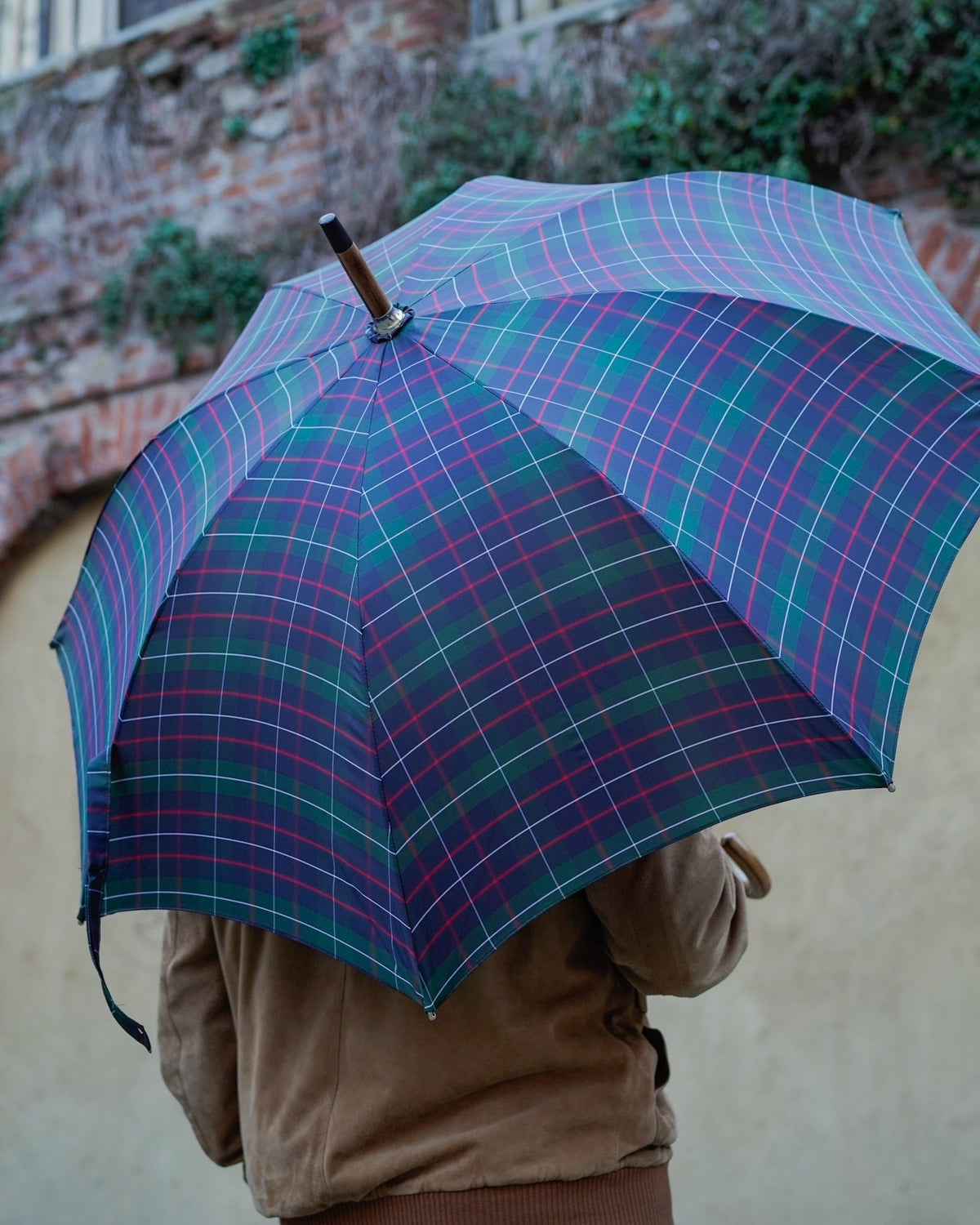
When choosing an umbrella, size matters more than many people realize. A compact umbrella can easily fit into a handbag, backpack, or briefcase, while a full-length umbrella offers a larger canopy, a more substantial frame, and often a more elegant appearance.
So, which is better: a compact umbrella or a full-length umbrella?
The answer depends on how you use an umbrella, how much protection you need, and whether portability or durability is your top priority. In this guide, we compare compact and full-length umbrellas, including their advantages, disadvantages, durability, wind resistance, portability, and style.
Compact vs Full-Length Umbrellas: Pros and Cons
Compact vs Full-Length Umbrellas at a Glance
| Feature | Compact Umbrella | Full-Length Umbrella |
|---|---|---|
| Portability | Excellent | Moderate |
| Storage | Easy | Requires more space |
| Canopy size | Usually smaller | Usually larger |
| Wind resistance | Depends heavily on construction | Often excellent with a strong frame |
| Durability | Varies by model | Often very good |
| Ease of carrying | Excellent | Good |
| Protection for two people | Limited to moderate | Better |
| Style | Practical and discreet | Classic and elegant |
| Best for | Travel and everyday carrying | Commuting, formal wear, and maximum coverage |
What Is a Compact Umbrella?
A compact umbrella, also called a folding umbrella, is designed to collapse into a smaller size. Many models fold two, three, or even more times, making them significantly easier to carry.
The main advantage is convenience. A compact umbrella can stay in your everyday bag so you have protection available whenever rain starts.

Pros of Compact Umbrellas
1. Excellent portability
The biggest advantage of a compact umbrella is its size. When folded, it can fit inside many handbags, backpacks, laptop bags, and travel cases.
This makes it particularly useful for:
- Daily commuting
- Business travel
- Air travel
- City walks
- Keeping in an office
- Emergency rain protection
2. Easy to store
A folding umbrella takes up considerably less space than a full-length model. You can keep one in a drawer, car, backpack, or suitcase without sacrificing much storage space.
3. Convenient for travel
For travelers, a compact umbrella is often the easiest option. Its small folded dimensions make packing more efficient, especially when luggage space is limited.
4. Lightweight options are available
Many compact umbrellas use lightweight materials and smaller frames. This can make them comfortable to carry throughout the day.
Cons of Compact Umbrellas
1. Smaller canopy
The primary compromise is coverage. Because the umbrella needs to fold into a small package, its canopy is often smaller than that of a full-length umbrella.
For one person in moderate rain, this may be perfectly adequate. During heavy rain or strong wind, however, more coverage can be valuable.
2. Folding mechanisms add complexity
A compact umbrella has more moving sections than a traditional straight umbrella. More joints and moving parts can mean more potential points of wear over time.
That does not mean every compact umbrella is fragile. A well-engineered folding umbrella with quality materials can be highly durable. However, construction quality matters considerably.
3. Can be less convenient to open and close
Some compact umbrellas require several folding movements before they are completely closed. This can be less convenient when you are getting into a car or entering a building.

What Is a Full-Length Umbrella?
A full-length umbrella, often called a straight umbrella, does not collapse into multiple sections. The shaft remains approximately the same length when the umbrella is closed.
This traditional design has been used for generations and remains popular because of its simplicity, durability, and classic appearance.
Pros of Full-Length Umbrellas
1. Larger coverage
Full-length umbrellas often have larger canopies, making them a strong choice when you want greater protection from rain.
A larger canopy can be especially useful for:
- Heavy rainfall
- Long walks
- Protecting formal clothing
- Carrying a handbag or briefcase
- Sharing with another person
2. Strong and simple construction
A straight umbrella generally has fewer folding joints than a compact umbrella. Its simpler construction can contribute to excellent durability when the frame, shaft, ribs, and canopy are properly manufactured.
For people who want an umbrella that can become a long-term everyday accessory, construction quality is often more important than whether the umbrella folds.
3. Comfortable handling
The longer shaft and traditional handle can provide a more natural grip. Some luxury umbrellas feature carefully crafted wooden handles designed not only for appearance but also for comfortable handling.
4. Classic appearance
A full-length umbrella has a distinctive elegance that a compact umbrella often cannot replicate.
This is particularly noticeable with premium umbrellas featuring:
- Handcrafted wooden handles
- Decorative metal details
- High-quality fabrics
- Carbon-fiber or reinforced frames
- Italian craftsmanship
- Artistic finishes
A full-length umbrella can function as both rain protection and a sophisticated accessory.
Cons of Full-Length Umbrellas
1. Less convenient to carry
The main disadvantage is obvious: a full-length umbrella is longer when closed.
It may not fit comfortably inside a handbag or small backpack, and it can be more cumbersome when traveling.
2. Requires more storage space
At home or in an office, a full-length umbrella needs somewhere to stand or lie flat. An umbrella stand can be useful for keeping it accessible near an entrance.
3. Can be heavier
Some full-length umbrellas are heavier than compact models, particularly luxury umbrellas constructed with substantial materials.
However, weight varies considerably between models, so the size of an umbrella alone does not determine how heavy it will be.
Compact vs Full-Length Umbrellas: Which Is More Durable?
Durability is one of the most important considerations when comparing umbrella styles.
It is tempting to assume that full-length umbrellas are always stronger because they do not fold. While the simpler construction can be an advantage, materials and engineering ultimately matter more than the umbrella's size.
A high-quality compact umbrella can outperform a poorly made full-length umbrella.
When evaluating durability, look at:
- Rib material
- Shaft construction
- Frame design
- Number and quality of joints
- Canopy fabric
- Handle construction
- Wind resistance
- Overall manufacturing quality
For premium umbrellas, materials such as fiberglass, carbon fiber, reinforced steel, and high-quality polyester fabric can provide a strong combination of flexibility and durability.
Which Umbrella Is Better in Strong Wind?
Wind resistance is another area where shoppers often compare compact and full-length umbrellas.
A larger full-length umbrella may provide excellent stability because of its robust construction and larger frame. However, a well-designed compact umbrella can also perform very well in windy conditions.
The most important factor is not simply whether the umbrella folds. Instead, pay attention to the frame's ability to flex without permanently deforming.
Features worth considering include:
Flexible ribs
Flexible ribs can help an umbrella respond to sudden gusts rather than resisting every force rigidly.
Reinforced frame
A strong frame can improve the umbrella's ability to withstand repeated exposure to wind.
Quality shaft
The shaft connects the handle to the canopy and needs to withstand both everyday use and sudden forces.
Vented canopy
Some umbrellas incorporate vents that allow wind to pass through portions of the canopy, potentially reducing pressure on the frame.
If wind resistance is your priority, always evaluate the specific umbrella's construction rather than assuming one format is automatically better.

Which Is Better for Travel?
For travel, the compact umbrella usually wins.
A folding umbrella can fit into luggage much more easily and is convenient when moving through airports, hotels, cities, and public transportation.
A compact umbrella is particularly practical if you:
- Travel frequently
- Carry a backpack
- Pack light
- Fly with carry-on luggage
- Walk around unfamiliar cities
- Want an umbrella available at all times
However, if your trip involves extended outdoor activities in rainy weather, a larger full-length umbrella may provide more comfortable coverage.
Best choice for occasional travel: Compact umbrella.
Best choice for maximum rain protection: Full-length umbrella.
Which Is Better for Everyday Use?
This depends on your routine.
If you leave home with a small bag and want to keep an umbrella with you at all times, a compact model is extremely practical.
If you commute to work, keep an umbrella in your office or car, and prioritize coverage and durability, a full-length umbrella may be the better choice.
Think about your umbrella as an everyday tool:
Choose compact if convenience comes first.
Choose full-length if coverage, handling, and traditional design matter more.
Which Umbrella Looks More Elegant?
When style is an important consideration, full-length umbrellas have a distinct advantage.
The longer shaft creates more room for distinctive handles and decorative details. This is one reason why many luxury umbrellas are designed as full-length models.
A beautifully crafted umbrella can complement a suit, coat, dress, or other formal clothing in much the same way as a quality leather accessory or watch.
For someone interested in timeless style rather than purely practical rain protection, a full-length umbrella can be an especially attractive choice.
Compact vs Full-Length Umbrella for Business and Formal Wear
For business professionals, the decision often comes down to lifestyle.
A compact umbrella is convenient because it can stay inside a briefcase or work bag. This makes it ideal for commuting and unexpected showers.
A full-length umbrella, on the other hand, can create a more sophisticated appearance when paired with formal clothing.
Imagine arriving at a business meeting in a tailored suit, carrying a beautifully finished wooden-handle umbrella. The umbrella becomes part of the overall look rather than something that simply gets pulled out when it rains.
For formal occasions, the full-length umbrella is often the more stylish option.
What About Umbrellas for Two People?
If you regularly share an umbrella, canopy size becomes especially important.
A compact umbrella can work for two people for short distances, but the smaller canopy may leave shoulders or clothing exposed.
A larger full-length umbrella generally provides more usable coverage.
If you frequently walk with a partner, child, or colleague during rainy weather, look for an umbrella with a generous canopy and a sturdy frame.
Are Expensive Umbrellas Worth It?
The price of an umbrella does not automatically determine its quality. However, premium umbrellas can offer advantages in materials, construction, craftsmanship, and design.
A luxury umbrella may feature:
- Handcrafted handles
- Higher-quality canopy fabric
- Reinforced ribs
- Carbon-fiber components
- Durable metal hardware
- Improved finishing
- Distinctive artistic details
- More refined opening and closing mechanisms
The right question is not simply "How much does the umbrella cost?"
Instead, ask:
"What am I getting for the additional price?"
If the umbrella is designed as a long-term accessory rather than a disposable rain product, investing in quality construction can make sense.
How to Choose Between a Compact and Full-Length Umbrella?
Before buying, consider these five questions.
1. Where will you carry it?
If it needs to fit inside a handbag or backpack, choose compact.
If you can carry it separately, a full-length model becomes more practical.
2. How much coverage do you need?
For occasional showers, compact may be enough.
For heavy rain and longer walks, consider a larger canopy.
3. How important is wind resistance?
Look beyond the umbrella format and investigate the frame, ribs, shaft, and materials.
4. Is appearance important?
For a classic, sophisticated appearance, a full-length luxury umbrella is difficult to beat.
5. Will you travel frequently?
Frequent travelers generally benefit from the convenience of a compact umbrella.
Compact vs Full-Length Umbrellas: Final Verdict
There is no universal winner in the compact vs full-length umbrella debate.
The best choice depends on your priorities.
Choose a compact umbrella if you value:
- Portability
- Easy storage
- Travel convenience
- Lightweight design
- Keeping an umbrella in your bag
Choose a full-length umbrella if you value:
- Greater coverage
- Classic design
- Comfortable handling
- Long-term durability
- Formal style
- Luxury craftsmanship
For everyday urban life and travel, a compact umbrella is incredibly convenient. For people who want maximum coverage and view an umbrella as part of their personal style, a high-quality full-length umbrella can be the better investment.
Ultimately, the best umbrella is the one that matches how you actually live. If you need rain protection wherever you go, keep a compact umbrella in your everyday bag. If you want a refined, durable accessory for commuting, formal occasions, and longer walks, consider a full-length luxury umbrella.
Frequently Asked Questions
Are compact umbrellas less durable than full-length umbrellas?
Not necessarily. Durability depends primarily on the quality of the frame, ribs, shaft, canopy, and construction. A well-made compact umbrella can be highly durable.
Is a full-length umbrella better in the wind?
It can be, particularly when it has a strong, well-designed frame. However, wind resistance depends on the specific construction rather than simply whether the umbrella is full-length.
What is the best umbrella for travel?
A compact folding umbrella is generally the most convenient option for travel because it takes up less space in luggage and bags.
Are full-length umbrellas better for heavy rain?
Often, yes. Their larger canopies can provide more coverage, particularly during prolonged or heavy rainfall.
Why are luxury umbrellas often full-length?
Full-length construction provides more room for substantial handles, decorative details, and traditional craftsmanship. It also gives the umbrella a classic and sophisticated appearance.
Should I buy a compact or full-length umbrella?
Choose compact if portability is your priority. Choose full-length if you prioritize coverage, traditional design, handling, and luxury craftsmanship.
Share:
Do Long Shoe Horns Work Better? A Complete Guide to Choosing the Right Length
How to Choose an Elegant Umbrella for Formal Occasions?